

How Veterinarians Use Technology From Digital X-Rays to Telemedicine
Modern vet medicine has changed a lot thanks to new tech. These changes are making pet care better than ever before. They offer new ways to diagnose and treat pets.
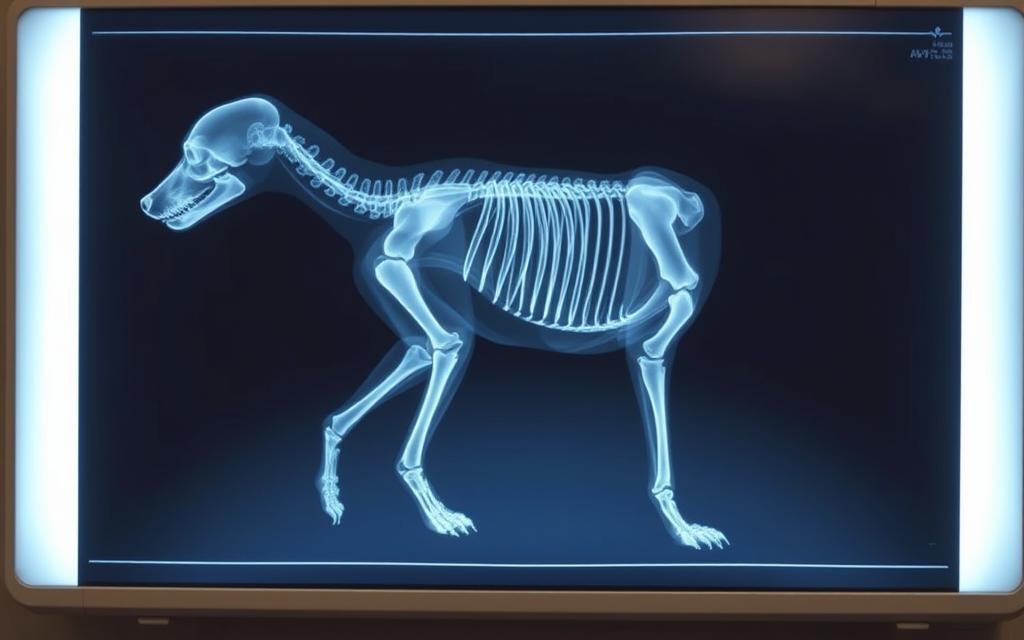
The use of veterinary digital x-rays is a big step forward. This tech gives clearer pictures and uses less radiation. It helps vets see bone breaks and other internal issues more accurately.
Telemedicine in vet practice is also a big deal. It lets vets talk to pet owners from anywhere. This makes it easier for people to get advice from vets, no matter where they are.
These tech advancements are part of a bigger push for better animal care. By using advanced tools, vets can make more accurate diagnoses. This leads to better care for our pets.
Learn more about how tech is changing vet medicine at this link.
The Transformation of Veterinary Diagnostics
Veterinary medicine has seen a big change in how it diagnoses patients. It has moved from old methods to new, advanced technologies. This change has helped vets make more accurate diagnoses and improve treatment plans.
From Conventional Film to Digital Radiography
The move from old X-ray films to digital radiography is a big step forward. Digital systems bring many benefits:
- Images are clearer and have better contrast
- They can be edited for detailed analysis
- Patients get less radiation
- Results come faster
Studies show digital radiography uses up to 70% less radiation than old film systems. It also gives better image quality. Vets can adjust images without needing more X-rays.
Related Posts:
- What Is Advanced Imaging Technology Beyond X-Rays and MRI
- How Technology Has Impacted Business The Digital…

- The Negative Effects of Technology on Education…

- How Technology Affects Social Interaction Changing…

- What Is Health Information Technology HIT Managing…

- What Drives Technology The Forces Behind Innovation

Sophisticated Imaging Modalities in Contemporary Practice
Today’s vet practices use many advanced imaging tools. These tools help vets see inside animals in detail.
Computed Tomography (CT) Scanners
CT scanners make detailed images of animals. They are great for:
- Looking at bones and fractures
- Checking for tumours
- Examining the brain and spine
CT scanners show 3D images. This helps vets see things they couldn’t before.
Magnetic Resonance Imaging (MRI)
MRI is becoming more common in vet care. It’s non-invasive and shows soft tissues well. It’s good for:
- Brain and nerve problems
- Soft tissue injuries
- Examining joints and ligaments
MRI uses magnetic fields, not radiation. This makes it safe for repeated scans.
Ultrasound Technology Enhancements
Ultrasound systems have improved a lot. They now have:
- Doppler for blood flow
- 3D and 4D imaging
- Portable units for emergencies
- Special probes for different areas
These updates let vets see things in real-time. They can check how organs work during procedures.
“Digital radiography offers higher resolution, contrast, and manipulation capabilities, with lower radiation exposure and faster results compared to conventional film.”
These advanced tools have changed vet diagnostics. They help vets diagnose and care for animals better than ever before.
How Do Veterinarians Use Technology in Digital Imaging
Modern vet practices have changed how they diagnose with new digital imaging tech. These tools give quick results and clearer images than old methods.
Digital X-Ray Systems and Their Clinical Applications
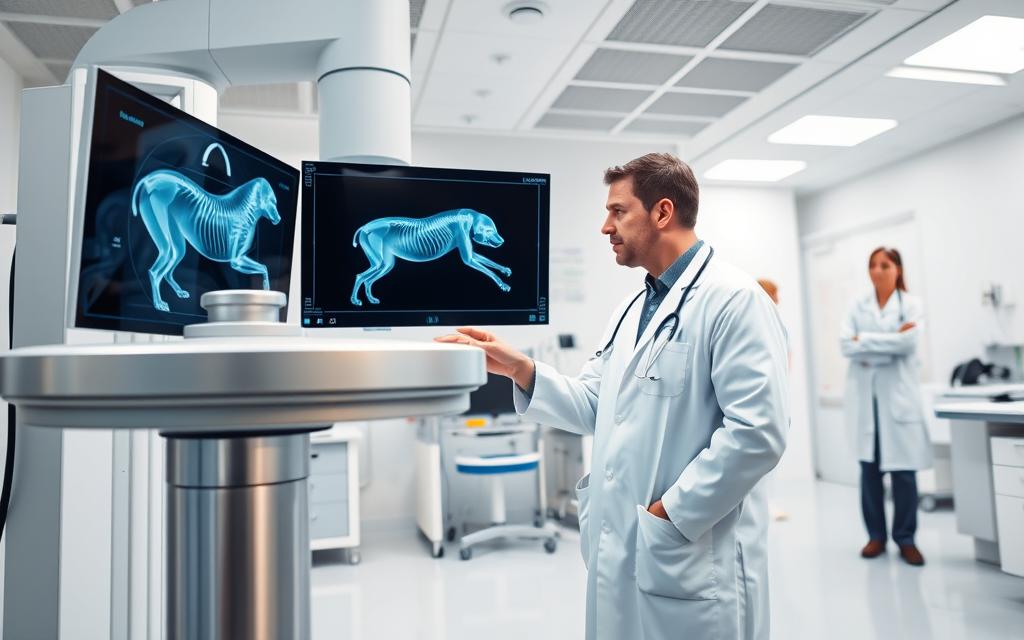
Vet clinics use digital radiography for many tests. It takes sharp pictures of bones, joints, and inside parts.
This tech helps vets spot breaks, check joint health, and see the gut clearly. Digital x-rays give fast results, making patients wait less and feel better.
Many clinics use these systems with their in-house diagnostics. This lets them check patients fully without sending them elsewhere.
Image Storage and Sharing Solutions
Managing medical images well is key in vet care today. Digital systems keep records tidy and easy to find.
Picture Archiving and Communication Systems (PACS)
PACS changes how vets handle images. It stores, gets, and sends digital images around the clinic.
Vets can look at old scans right away during visits. This helps plan treatments and track progress better.
It also makes teamwork easier. Digital x-rays can be shared with experts for a second look, making diagnoses more accurate.
Cloud-Based Storage Platforms
Cloud storage is a flexible and safe way for vets to manage images. It lets them access patient images from anywhere.
Vets can look at cases anytime or share images with experts anywhere. This supports online consultations and second opinions.
Cloud systems have strong security to keep patient info safe. They’re the future of managing medical images in vet digital imaging.
Laboratory Technology Progress
Veterinary practices have seen big changes in lab diagnostics. These changes help doctors get accurate results faster. This is key for better treatment and planning for surgeries.
In-House Diagnostic Equipment
Modern vet clinics use their own lab equipment more. This means they don’t have to send samples out as much. It’s great for urgent cases because they can get answers right away.
Now, clinics have everything they need for testing. This is a big step forward in veterinary surgery tech. It gives doctors the info they need for surgeries and aftercare right away.
Automated Blood Analysers
Automated blood analysers have changed how vets check patients. They can get detailed blood tests in minutes, not hours.
These machines are accurate and can check more things than before. This is very important for checking patients before surgery and during it.
Point-of-Care Testing Devices
Point-of-care testing devices bring lab tests to the exam room. They can quickly check things like blood sugar and how blood clots. This is super helpful during surgeries and emergencies.
A study in the Journal of Veterinary Medical Science shows how fast these tests can help make decisions.
Remote Laboratory Services
For tests that need special equipment, remote labs are a good option. They let clinics send samples and get results online. This is easy and safe.
Remote labs work with what clinics already have. They help clinics do more tests without buying expensive equipment. This makes a strong team for veterinary surgery tech.
Telemedicine in Veterinary Practice
Virtual care has changed how vets help pets, making healthcare more accessible. Telemedicine is a big step forward, letting vets help pets from anywhere.
Remote Consultations and Diagnostic Services
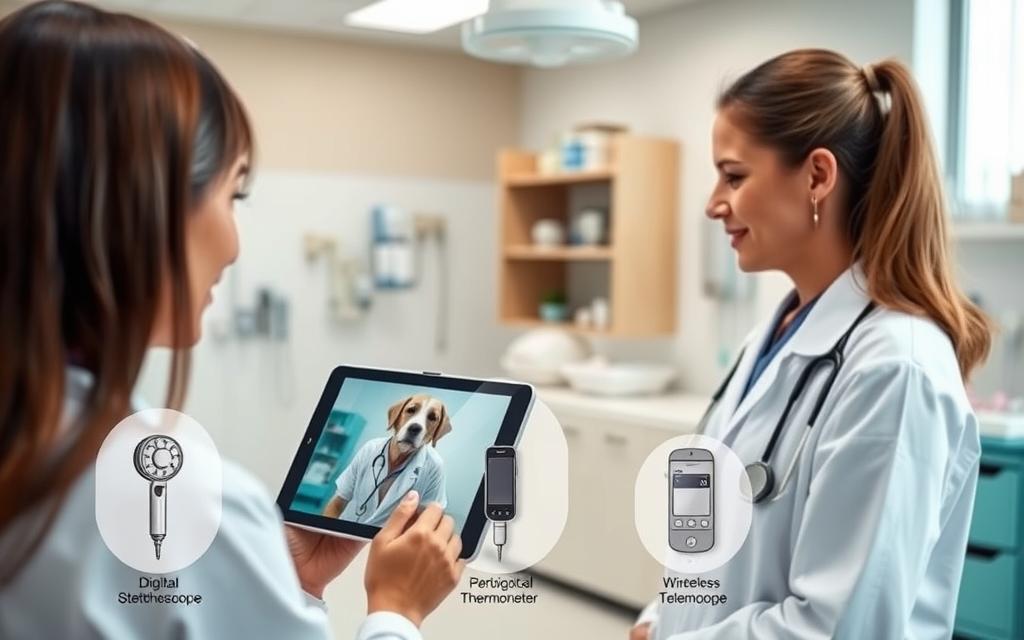
Telemedicine includes three main parts: talking to patients online, monitoring their health, and sorting out urgent cases. Vets can check on pets without being in the same room.
Having a good relationship with the vet is key for online care. This makes sure pets get the right treatment and follow-up care.
Places far from vets really benefit from telemedicine. Pet owners can get expert advice without long trips. It also makes follow-up visits easier.
Telemedicine Platforms and Software Solutions
Today’s vet practices use practice management software with telemedicine. This makes it easy to switch between face-to-face and online care.
Video Consultation Tools
Good video tools let vets see patients live. They have:
- HD video for clear views
- Screen sharing for teaching
- Recording for keeping records
- Works on many devices for clients
Secure Messaging Systems
Safe messaging lets vets and clients talk without worry. It helps with:
- Sharing photos and videos
- Renewing prescriptions
- Booking appointments
- Updating medical records
Top practice management software has both video and messaging. This gives a full telemedicine package in one place.
Starting telemedicine needs careful thought about laws and tech. But, the benefits for vets and pets make it worth it.
Surgical Technology Advancements
Modern veterinary surgery has seen big changes thanks to new technology. These changes have made surgeries more precise, safer for patients, and better for recovery.
Laparoscopic and Endoscopic Equipment
Minimally invasive surgery has changed veterinary care a lot. Laparoscopic tools let surgeons work through small cuts, not big ones.
This method cuts down on tissue damage and speeds up healing. Endoscopic tools let doctors see inside without big surgeries.
Now, vets use high-definition cameras and special tools for tough surgeries. These tools help them work with great accuracy and less pain for animals.
Advanced Anaesthesia Monitoring Systems
Keeping patients safe during surgery has gotten much better with new monitoring tech. These systems watch vital signs all the time during surgery.
Digital Anaesthesia Machines
New anaesthesia machines control medication very precisely. They have digital screens for setting exact doses.
These machines also have safety alerts for any problems. They keep detailed records of anaesthesia use.
Comprehensive Patient Monitoring
Advanced monitoring systems watch many health signs at once. They check heart rate, blood pressure, oxygen levels, and breathing.
Some systems work with wearable pet tech to keep watching after surgery. This helps keep patients safe from start to finish.
This data helps vets make quick, smart choices during surgery. It gives them insights they didn’t have before.
Practice Management Software Systems
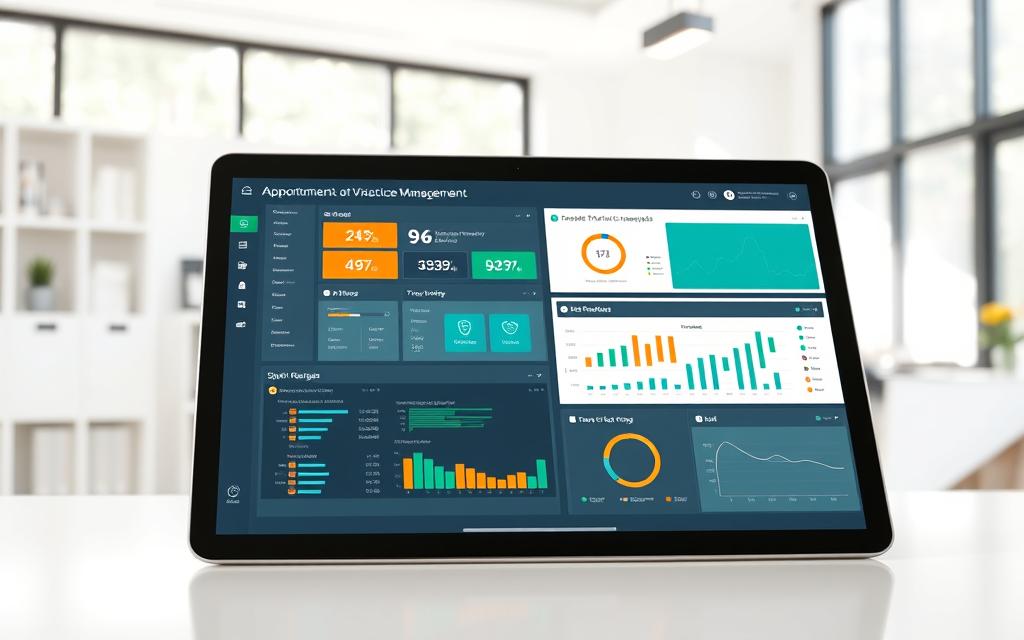
Modern veterinary practices are using advanced software to change how they work. These systems are key emerging vet tech innovations. They make managing patient records and supplies much easier.
Electronic Medical Records (EMR)
Digital records have changed how vets keep track of patient info. EMR systems get rid of paper files. They create one place for all patient data.
These systems make it easy to find medical histories and treatment plans. Staff can focus more on patients, not searching for files.
Records are safe in the cloud. This means vets can access them from anywhere. It helps keep care going, even when vets are not in the office.
Appointment Scheduling and Reminder Services
Automated scheduling has changed how practices plan their days. These systems work well with other tools.
Clients can book online through the practice’s website. The system checks if vets are free, avoiding double bookings.
Reminders cut down on missed appointments. Practices can send:
- Emails 48 hours before
- SMS texts 24 hours before
- Phone calls for important follow-ups
Client Communication Platforms
Modern software has great tools for talking to clients. These tools help keep clients involved and save staff time.
Integrated messaging lets practices send:
- Instructions after treatment
- Reminders for medication
- Preventative care tips
- Newsletters and updates
Two-way messaging lets clients ask questions. This builds stronger relationships between clients and the practice.
Inventory Management Solutions
Smart inventory systems keep supplies right. They track what’s used and order more when needed.
They also watch expiration dates. This stops waste and keeps patients safe.
These systems work with buying systems too. They make managing everything easier. The software is the heart of the practice.
These systems are the future of vet practice management. They show how emerging vet tech is changing animal healthcare.
Wearable Technology for Animal Patients
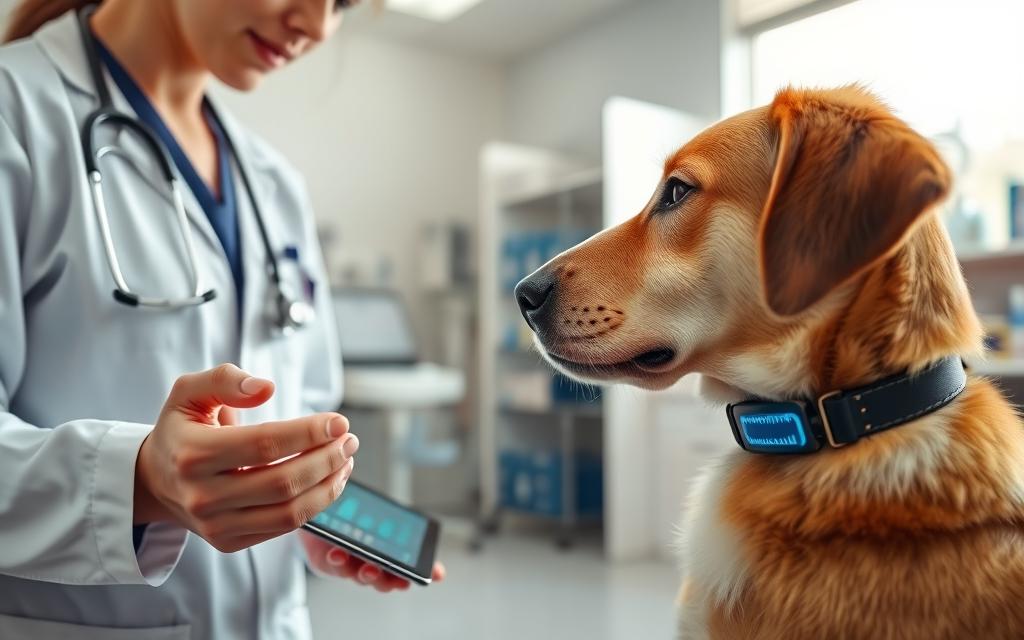
Wearable tech has changed how vets track animal health. These devices collect data all the time. This helps with better care and catching problems early.
Activity and Health Monitoring Devices
Pet activity trackers count steps and rest. They show how active pets are. Vets use them to check fitness and recovery.
Health monitors spot unusual patterns. They might show hidden health issues. Some use veterinary AI diagnostics to check the data.
GPS Tracking and Location Services
GPS helps keep pets safe by tracking their location. It shows where they are and keeps them from straying.
Continuous Health Monitoring Systems
Systems like Holter monitors track vital signs over time. They give vets a lot of health info. This helps with better care plans.
Some need a vet-client-patient relationship for use. The data helps make accurate diagnoses and treatments.
Remote Temperature and Vital Sign Sensors
New sensors track body temperature and heart rate from afar. They’re great for after surgery and chronic conditions.
These sensors work with veterinary AI diagnostics platforms. They spot trends and warn vets of issues. This tech is a big step forward in vet care.
Emerging Technologies in Veterinary Medicine
The veterinary field is changing fast with new technologies. These tools improve how we diagnose and treat animals. They also help us talk better with pet owners.
3D Printing for Surgical Planning and Prosthetics
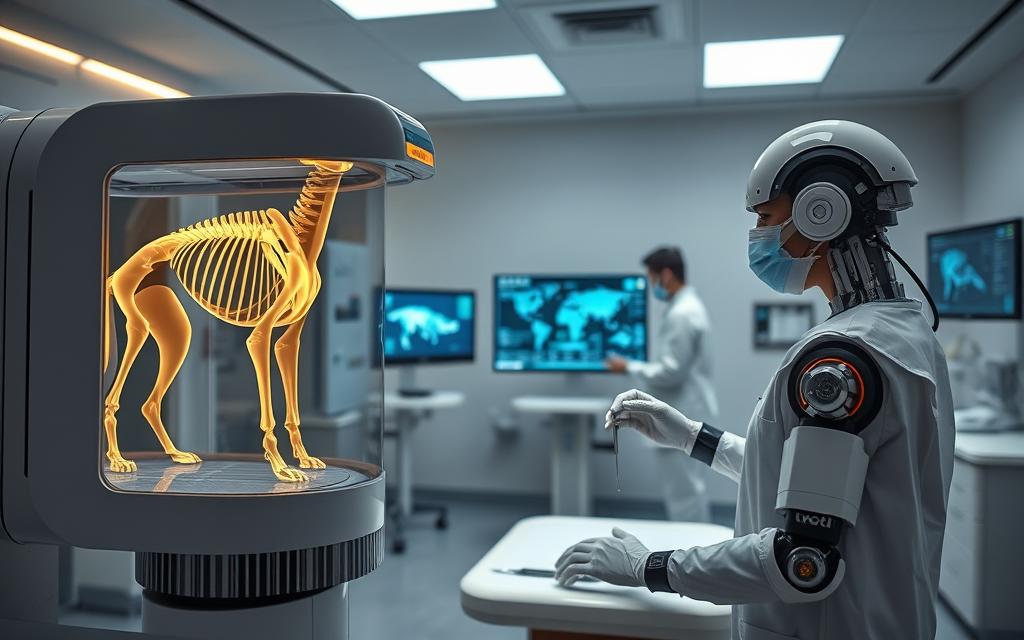
Three-dimensional printing is changing surgery and rehab in vet care. Vets use 3D printers to make detailed models from scans.
These models help surgeons plan complex surgeries better. They also make custom prosthetics and implants for animals.
This makes pets recover faster and live better. It also helps owners understand their pet’s health and treatment.
Artificial Intelligence in Diagnostic Processes
Artificial intelligence is changing how vets look at medical data. These systems can quickly and accurately process lots of information.
Machine Learning Algorithms
Machine learning algorithms are great at spotting patterns in medical images. They look at scans like X-rays and ultrasounds with high accuracy.
Vets use these algorithms to find early signs of diseases. This helps them make better decisions and improve diagnosis.
Predictive Analytics Tools
Predictive analytics tools use past patient data to predict health trends. They can spot animals at risk of certain conditions.
Vets use this info to prevent problems and start treatments early. This makes care more effective and helps in talking with pet owners.
| Technology Type | Primary Application | Benefits to Practices | Impact on Patient Care |
|---|---|---|---|
| 3D Printing | Surgical guides & prosthetics | Reduced surgery time | Customised treatment solutions |
| Machine Learning | Image analysis | Faster diagnosis | Early disease detection |
| Predictive Analytics | Risk assessment | Preventive care planning | Improved treatment outcomes |
These new technologies are the future of vet care. They offer better care, more accurate diagnoses, and better communication with pet owners.
Conclusion
Veterinary medicine has changed a lot thanks to technology. Tools like digital x-rays and telemedicine have changed pet healthcare a lot. These tools help give pets better care.
Digital imaging gives quick, high-quality results. Telemedicine lets pet owners get advice from vets without leaving home. Practice management software makes running a vet clinic easier.
New tech like artificial intelligence and 3D printing will bring even more changes. These new tools help vets give pets the best care possible.
Using these technologies makes vet work better in every way. It means pets get diagnosed and treated faster and more effectively. This is good for both vets and the pets they help.
Keeping up with new tech in vet care is very important. It helps pet healthcare stay modern. Using these tools is key to making vet care better for pets.
 Keith Stewart