

What Is Wearable Technology Devices for Health and Connectivity
Modern life is filled with electronics. They turn up in jewellery, accessories, and even clothes.
Wearable technology is about gadgets you wear on your body. They have advanced features for processing and talking to other devices.
These devices do many things, like tracking your health or keeping you connected. They’re used for both medical needs and fun activities.
For example, there are smart hearing aids and VR headsets. Even simple patches with sensors are part of this tech.
These tools are changing how we use technology. They mix digital ease with our physical health.
Defining Wearable Technology: What Does Wearable Technology Mean?
Wearable technology is a new kind of electronic device. It’s made to be worn on the body, like accessories or clothes. These gadgets give us computing power and connect us to the world, making life better.
Today’s wearables have come a long way. They can track our health and let us talk to others easily. This was once just in science fiction.
Historical Evolution of Wearables
Wearable tech has been around for a while. Eyeglasses from the 13th century were the first. But the real start was in the 1960s with the first devices.
Some big moments in wearable tech include:
Related Posts:
- The Negative Effects of Technology on Education…

- How Technology Has Impacted Business The Digital…

- What Industry Is Dell Technologies In Computers and…

- What Is Health Information Technology HIT Managing…

- How Technology Affects Social Interaction Changing…

- What Drives Technology The Forces Behind Innovation

- 1975: The calculator watch came out, mixing time with computing
- 1987: Digital hearing aids improved sound
- 1994: The first wireless webcam let us connect anywhere
- 2000s: Bluetooth headsets and Fitbit trackers changed personal tech
- 2010s: Google Glass and Apple Watch made smart wearables common
This shows how far wearables have come. They’ve gone from simple tools to complex devices that are now big in the market.
Key Characteristics of Wearable Devices
Today’s wearables have special features. These make them useful and easy to use, without being too heavy or uncomfortable.
Portability and User Interface
Wearables are small and light. They’re made to be worn for a long time without hassle. They usually have touchscreens, voice commands, or buttons for easy use.
They fit well with our bodies, not the other way around. This makes them a big change in how we use digital tools.
Wearables can connect to other devices easily. They use Bluetooth and Wi-Fi to share data in real-time. This lets them sync with phones, tablets, and computers, making a complete digital system.
Wearables are great at collecting and sharing data. They track our activities, health, and surroundings. This gives us useful insights and helps us stay healthy.
This constant flow of data is key. It lets us monitor our health closely. It also builds a detailed digital profile of us, getting better over time.
As one expert said:
“Wearables have changed from fun gadgets to essential tools for health and connection. They’ve had a huge impact on how we use technology.”
Wearables are special because they improve our health and connect us to others. They’re a big part of our digital lives.
Categories of Wearable Technology Devices
Wearable devices fall into three main groups based on their use. These include wearable technology for fitness, health monitoring, and more.
Health and Fitness Trackers
Health and fitness trackers are very popular. They track how active you are, your vital signs, and your overall health.
They count your steps, track calories, monitor your heart rate, and analyse your sleep. The Fitbit Charge series is a great example, focusing on health over smart features.
These devices have long battery life and simple designs. They show your health data clearly. Many connect to apps on your phone for detailed tracking.
Smartwatches and Their Multifunctionality
Smartwatches are the most versatile, combining health tracking with lots of features. The Apple Watch is like a small computer on your wrist.
They do more than just track health. They manage notifications, let you communicate, and control media. They’re perfect for those who want health insights and digital connectivity.
Smartwatches have powerful processors, high-resolution screens, and lots of apps. They work well with phones but are not just for fitness.
Medical-Grade Wearables for Clinical Use
Medical-grade wearables are the most advanced, made for medical use. They go through strict testing and approval.
They include devices like glucose monitors for diabetes, ECG monitors for heart health, and sensors for remote patient care. They give accurate data for medical decisions.
Unlike other wearables, medical devices connect directly with healthcare systems. They show the future of wearable tech in patient care and disease management.
Health Monitoring Capabilities of Wearables
Modern wearable tech has changed how we check our health. It gives us real-time info that was once only in hospitals. These devices track our health in detail, helping us take care of ourselves.
Heart Rate and Activity Tracking
Today’s wearables have advanced sensors. They watch our heart rate and how active we are. They track our steps, calories burned, and how hard we exercise very accurately.
Fitness fans use this info to improve their workouts. It shows how our body reacts to different activities and stress levels.
Devices like Fitbit Charge 5 and Garmin Vivosmart 5
The Fitbit Charge 5 is top for tracking activity. It has an ECG app, stress tools, and daily readiness scores. These help users know when to push harder or rest.
Garmin’s Vivosmart 5 also tracks activity well. It focuses on hydration and body energy. Both devices connect to phones, letting users see trends and share with doctors.
Sleep Analysis and Recovery Metrics
Good sleep is key to health, and wearables now track it well. They measure sleep stages, how long we sleep, and its quality. This helps improve our rest and recovery.
Wearables track sleep patterns and disturbances. They show what affects our sleep quality. This info helps us make lifestyle changes for better sleep and energy during the day.
Examples: Oura Ring and Withings Sleep Analyzer
The Oura Ring is known for its detailed sleep tracking. It checks body temperature, heart rate, and breathing at night. It gives sleep scores based on this data.
Withings Sleep Analyzer is different. It’s an under-mattress device that tracks sleep cycles, snoring, and sleep apnea risk. Both offer insights to improve sleep quality.
Chronic Disease Management Tools
Wearable tech is vital for managing chronic diseases. These devices monitor health continuously. They alert users and doctors to health issues.
For people with diabetes, heart problems, or breathing issues, these tools offer peace of mind. They help manage diseases better. The data can be shared with doctors for remote monitoring and timely help.
Continuous Glucose Monitors: Dexcom G7 and Freestyle Libre 3
Dexcom G7 is a big step in glucose monitoring. It gives real-time glucose readings every five minutes. It alerts phones when glucose levels are too high or low.
Freestyle Libre 3 also monitors glucose continuously. It has a smaller sensor and lasts 14 days. Both help diabetics control glucose levels better and reduce risks through constant monitoring.
Connectivity Features in Wearable Devices
Modern wearable tech does more than track health. It offers advanced connectivity, turning devices into communication hubs. These wearables can manage both personal health data and digital interactions.
Bluetooth and Wi-Fi Integration
Today’s wearables use Bluetooth and Wi-Fi for connectivity. Bluetooth connects to phones and devices nearby. Wi-Fi gives internet access for more features.
This mix keeps data synced without using too much battery. Devices can choose the best connection based on needs.
Smartphone Synchronisation and Notifications
Pairing with smartphones is key for modern wearables. They show important notifications, calls, and messages on your wrist. This saves time by not needing to check phones.
Health data from biometric sensors goes straight to apps. This builds detailed health profiles on all devices.
Apple Watch Series 9 and Samsung Galaxy Watch 6
The Apple Watch Series 9 and Samsung Galaxy Watch 6 lead in syncing. They offer:
- Instant notification mirroring from paired smartphones
- Automatic health data backup to cloud services
- Cross-platform compatibility with various applications
- Customisable alert preferences for different applications
These top models show how smart phone integration boosts convenience and function.
IoT and Smart Home Connectivity
Wearables are becoming central for smart homes. They connect to IoT, letting users control devices with their wrists.
Common uses include:
- Adjusting smart thermostats and lighting systems
- Controlling entertainment systems and smart speakers
- Receiving security alerts from home monitoring systems
- Operating smart locks and garage doors
This move into home automation shows wearable tech’s growth. It now manages more than just health, covering lifestyle management.
Benefits of Wearable Technology for Personal Health
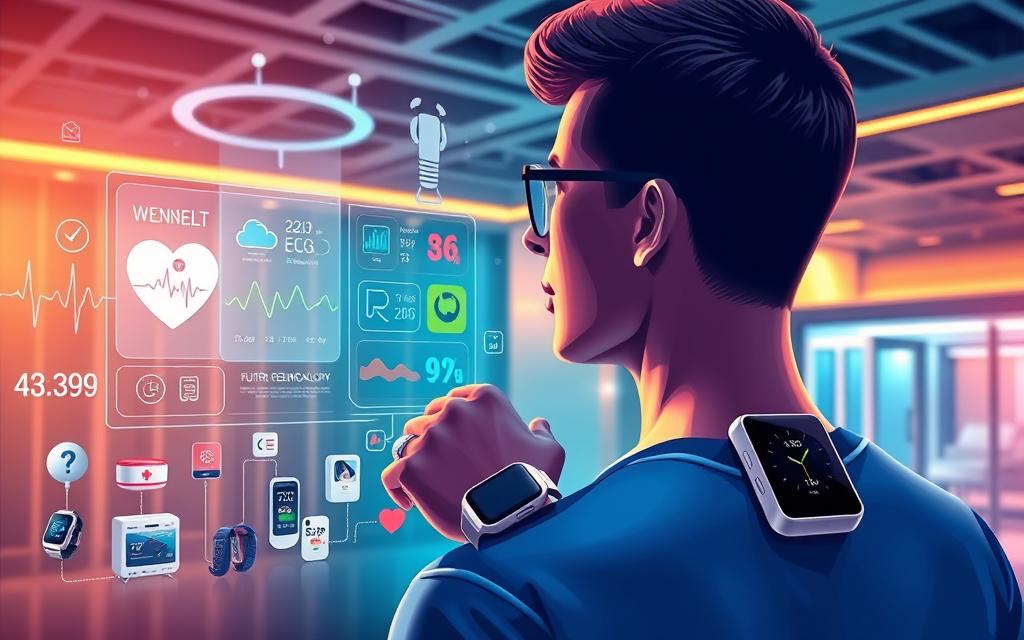
Wearable technology has changed how we look after our health. It gives us real-time data and tips to improve our wellbeing. Thanks to IoT connectivity, sharing health data is easy and smooth.
Promoting Physical Activity and Wellness
Wearables help us live healthier by setting goals and motivating us. They remind us to stay active and suggest workouts based on our fitness level. It’s like having a personal trainer in your pocket.
These devices turn exercise into fun challenges with rewards and sharing options. They keep us on track with our fitness goals. This makes staying healthy a part of our daily lives, not just a separate task.
Early Detection of Health Issues
Wearables can spot health problems early. They track heart rhythms, sleep, and blood oxygen levels. Some even check for atrial fibrillation with ECG.
They alert us when something’s off, so we can get help quickly. This early warning can lead to better health outcomes in the long run.
Personalised Health Insights
Wearables give us health tips based on our own data. They look at our sleep, activity, and heart rate to offer advice. This helps us see how our habits affect our health.
Thanks to IoT connectivity, these devices can link with other health apps and records. This creates a detailed health profile that grows with us. We get advice that’s truly tailored to our needs.
They can even forecast health issues based on our data. This means we can take steps to prevent problems before they start. It’s the future of health tech.
Enhancing Social Connectivity Through Wearables
Modern wearables are great for connecting with others. They link physical activity with digital interactions. These devices turn solo health tracking into group experiences, boosting motivation and support.
Communication Features in Smart Devices
Today’s smart devices make staying in touch easy. Smartwatches let you call, text, and get notifications from your wrist. This keeps you connected while staying active.
Many wearables now have voice assistants and quick reply options. These features help you stay in touch with friends while working out. Hands-free talking makes activities safer and more fun.
Social Sharing and Community Engagement
Wearables make sharing your fitness journey easy. You can post your progress and achievements online. This turns personal wins into celebrations with friends.
Seeing friends’ fitness posts can motivate you. It creates a cycle where being active inspires others. This boosts everyone’s health goals.
Platforms like Strava and Fitbit Community
Platforms like Strava and Fitbit Community are key for wearable users. Strava’s leaderboards spark friendly competition. It turns workouts into shared achievements.
Fitbit Community offers groups and challenges. It’s a place for users to find support and advice. These communities make users more likely to stick with their devices.
When using these platforms, remember to check your data privacy settings. Most services let you control what you share. Knowing how to set these options helps you share safely.
These social networks show how wearables do more than track health. They build supportive groups that make fitness journeys better through shared experiences and encouragement.
Popular Wearable Technology Brands and Models
The wearable tech market has many top brands. Each one has its own special features. They cater to different needs and tastes.
Apple: Leading with Innovation
Apple leads with its advanced wearables. They combine the latest tech with easy-to-use designs. This makes their products stand out.
Apple Watch Ultra and Health Features
The Apple Watch Ultra is Apple’s top wearable. It has top-notch health tracking. This includes:
- Precision heart rate tracking with ECG functionality
- Blood oxygen saturation monitoring
- Temperature sensing for menstrual cycle tracking
- Fall detection and emergency SOS features
These features make the Apple Watch Ultra great for health tracking.
Fitbit: Focus on Fitness and Health
Fitbit is known for health-focused wearables. They focus on easy fitness tracking and detailed health data.
Fitbit Sense 2 and Premium Services
The Fitbit Sense 2 offers advanced health tracking at a good price. It has:
- Continuous stress management tracking
- Advanced sleep analysis with Sleep Score
- Built-in GPS for activity mapping
- Skin temperature variation monitoring
Fitbit’s Premium service adds more with personal coaching and health insights.
Garmin: Excellence in Outdoor and Sports Tracking
Garmin is top for outdoor and sports wearables. Their devices are tough and packed with features. They’re perfect for athletes and adventurers.
Garmin Fenix 7 and Tactix 7
The Fenix 7 and Tactix 7 are Garmin’s best for outdoors. They’re durable and have special features like:
- Multi-band GPS for superior accuracy
- Topographical mapping and navigation
- Advanced performance metrics for athletes
- Military-grade construction materials
These models are ideal for outdoor lovers and pro athletes needing top tracking.
| Brand | Flagship Model | Key Health Features | Specialisation |
|---|---|---|---|
| Apple | Watch Ultra | ECG, Blood Oxygen, Temperature Sensing | Comprehensive Health Monitoring |
| Fitbit | Sense 2 | Stress Management, Sleep Analysis | Fitness and Wellness |
| Garmin | Fenix 7/Tactix 7 | Multi-band GPS, Performance Metrics | Outdoor and Sports Tracking |
Each brand offers unique benefits in wearable tech. Knowing these helps users pick the right device for their health and lifestyle.
Data Privacy and Security in Wearable Technology
Keeping personal health data safe is a big challenge in wearable tech. These gadgets collect sensitive info about our bodies and activities. They even track our locations, making strong security measures a must.
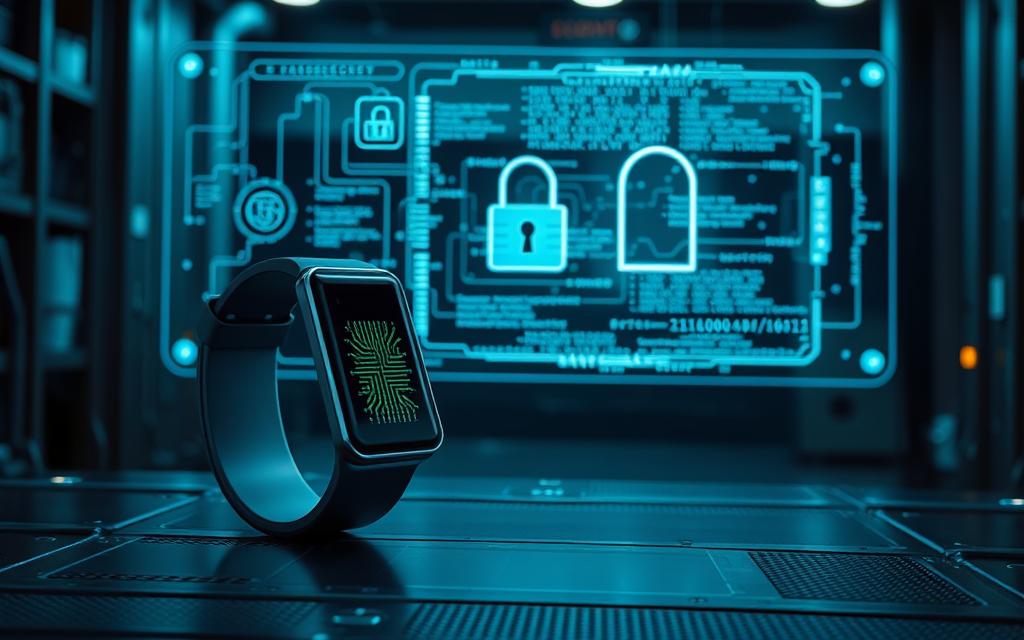
Many people don’t know how much info their devices collect. They gather everything from heart rate patterns to sleep cycles. This data creates a detailed picture of your health and habits. If it falls into the wrong hands, it could lead to serious privacy issues.
Risks and Concerns
Wearable devices face many security threats. Data breaches can expose your health info to the wrong people. Many devices store data in the cloud, which can be vulnerable if security isn’t strong enough.
Biometric info, like fingerprints and heart rate patterns, is a big concern. You can't change these like you can a password. If this data is compromised, the effects could last a long time. Looking at wearable devices health alongside health information hit managing gives a clearer view of the wider topic. Devices like the Apple Watch collect a lot of biometric data, making security key.
Cyberattacks on wearables are getting more advanced. Hackers might steal your personal info or even change your health readings. Some worries include:
- Unauthorised access to health databases
- Location tracking without consent
- Third-party data sharing without clear disclosure
“The sensitivity of health data collected by wearables demands the highest security standards. Users deserve transparency about how their information gets used and protected.”
Best Practices for Users
There are steps you can take to improve your wearable device security. Start with using strong, unique passwords for your accounts. Many people use simple passwords that are easy to guess.
Regular software updates are also important. They provide security patches for newly found vulnerabilities. Keeping your Apple Watch and other devices updated is a must.
Understanding data sharing policies is also key. Check what info your device collects and how it’s used. Many services let you adjust privacy settings to limit data sharing.
| Security Measure | Implementation | Protection Level |
|---|---|---|
| Two-Factor Authentication | Adds extra login verification | High protection |
| Regular Software Updates | Fixes security vulnerabilities | Essential maintenance |
| Data Encryption | Scrambles stored information | Basic security requirement |
| Privacy Settings Review | Controls data sharing options | User customization |
Other security tips include disabling unnecessary connectivity features. Bluetooth and Wi-Fi can be entry points for hackers if left active. Also, review app permissions regularly, as some apps might ask for more data than they need.
To stay safe, research a device’s security features before buying. The Apple Watch has many built-in security measures. But, knowing how to use them properly is critical. Remember, your health data deserves the same protection as your financial info.
Future Trends in Wearable Technology
The world of wearable technology is changing fast. New ideas are coming up that will change how we keep an eye on our health and stay in touch. Soon, these devices will do a lot more than they do now.
Advancements in Biometric Sensors
Next-generation biometric sensors are very exciting. They are getting better at tracking health with high accuracy.
These sensors will do more than just track heart rate and activity. They will check blood sugar levels without needles, track blood pressure all the time, and spot health problems early. This is a big step up from today’s devices.
Companies like Fitbit are working hard to make these sensors better. They want to create devices that give medical-quality data but are easy for everyone to use.
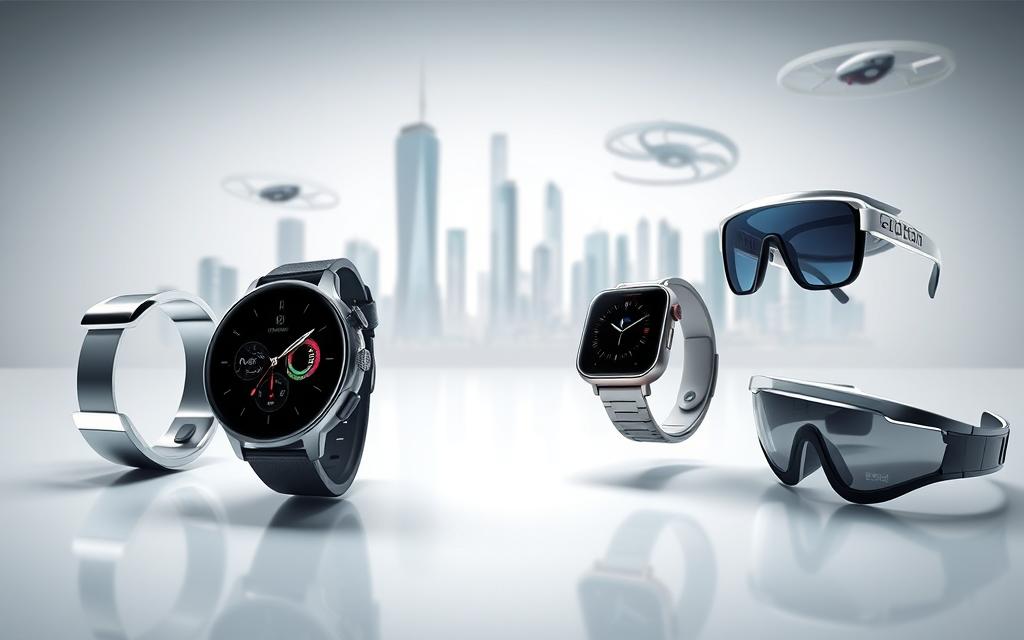
Energy harvesting tech will also be key in future wearables. Devices might get power from body heat, movement, or light. This could solve the big problem of needing to charge them often.
Integration with Artificial Intelligence
Artificial intelligence will change how wearables work with health data. Instead of just collecting data, they will use AI to give insights and predictions.
These smart systems will learn from how we act and behave. They will then give us tips to improve our health. The tech will start to act before problems happen.
AI will help wearables spot small changes that might mean health issues are coming. This could lead to early treatment and save lives.
AI and advanced sensors together open up amazing possibilities. Imagine a device that not only tracks your sleep but also suggests ways to improve it based on your body.
| Emerging Technology | Potential Application | Expected Timeline |
|---|---|---|
| Smart Contact Lenses | Augmented reality displays and health monitoring | 5-7 years |
| Non-invasive Glucose Monitoring | Diabetes management without finger pricks | 3-5 years |
| AI Brain Implants | Cognitive assistance and neural interfaces | 7-10 years |
| Energy Harvesting Systems | Self-powering devices without charging | 2-4 years |
Looking even further ahead, we might see AI brain implants to help with thinking. This is a very new idea but shows where wearable tech could go.
The future of wearable tech looks very exciting. It will bring big changes, mixing health monitoring with personal devices. This will open up new ways to keep an eye on our health and stay connected.
How to Choose the Right Wearable Device for Your Needs
Choosing the right wearable tech is all about what you need and how you live. With so many choices, picking the right one means it will really improve your day.
Start by thinking about what’s most important to you. Some people want health tracking, while others like smart features. Knowing what you need helps you choose better.
Assessing Health versus Connectivity Priorities
Wearables for health track your heart rate, sleep, and activity well. They’re great for those who want detailed health data.
Devices for connectivity focus on smart features and easy app use. They handle notifications and calls well. Many wearables offer both health and connectivity.
Ask yourself these questions:
- Do you need detailed health metrics or general wellness tracking?
- How important are smartphone notifications and message handling?
- Will you use the device mainly for fitness or everyday use?
Budget and Feature Considerations
Set a budget before looking at options. Wearables range from cheap to expensive. Remember, cost doesn’t always mean better for you.
Look at battery life, sensor accuracy, and compatibility. Good battery life means less charging. Accurate sensors give reliable data. Make sure it works well with your phone and other devices.
Choosing a well-known brand like Garmin is wise. They’re reliable and have lots of features. Read reviews and expert opinions before deciding.
| Feature Category | Health-Focused Devices | Connectivity-Focused Devices | Balanced Options |
|---|---|---|---|
| Primary Function | Biometric monitoring | Smart notifications | Mixed capabilities |
| Battery Life | 5-7 days average | 1-2 days average | 3-5 days average |
| Price Range | £100-£300 | £200-£500 | £150-£400 |
| Best For | Fitness enthusiasts | Tech-savvy users | General consumers |
| Example Brands | Garmin, Fitbit | Apple, Samsung | Various options |
Lastly, think about comfort and design. You’ll wear it every day. Choose something that feels good and fits your style. Try different models to see how they fit and work before buying.
Conclusion
Wearable technology has changed how we manage our health and stay in touch. Devices from Apple, Fitbit, and Garmin give us tools to track fitness and vital signs. They also make our daily lives easier.
These innovations help us manage chronic diseases better. They let users and doctors spot problems early. This way, we get to know more about our health.
But, we must think about privacy and cost. It’s key to keep our data safe and pick devices that fit our health needs and budget.
Future wearables will get even better with new sensors and AI. They will work closer with healthcare and smart homes.
Using these technologies lets us take charge of our health. The chance for a better life through tech is huge.
 Christian Morris