


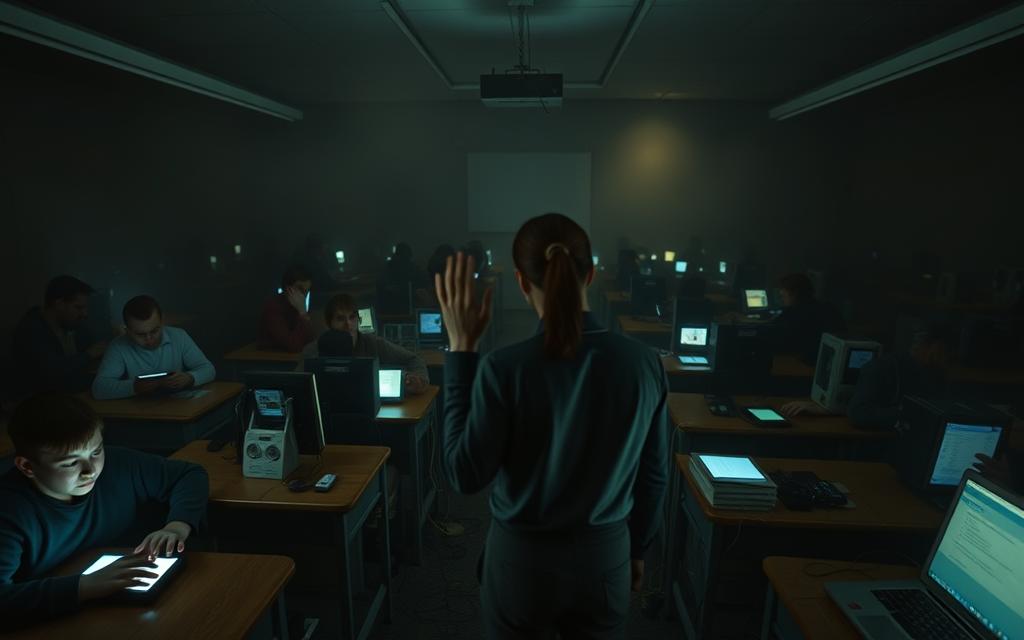
Modern classrooms have welcomed digital tools with open arms. Many teachers think these innovations change learning for the better. But, there are hidden costs to this digital shift.
Research shows a worrying trend in digital learning spaces. Students find it hard to focus during lessons. This is because of constant alerts and too much media.
This distraction affects their grades. Studies show that understanding drops when tech is used too much. The tools meant to help learning can actually harm it.
There’s also a growing worry about dependency. Students are using devices for simple thinking tasks. This might stop them from developing important thinking skills.
Teachers around the world are dealing with these issues. They must find a balance between tech’s benefits and its drawbacks. This article looks into these critical problems in today’s classrooms.
The Digital Transformation of Modern Classrooms
Educational institutions worldwide have seen a big change with technology. This digital classroom shift is a major change in how we teach and learn. It has changed how teachers teach, how students learn, and the results of education at all levels.
The Proliferation of Educational Technology
Schools and universities have quickly started using new tech tools to improve learning. Interactive whiteboards have replaced old chalkboards. Now, systems like Canvas and Blackboard help manage schoolwork and tests.
Digital books and online materials keep getting updated. Tablets and laptops are now common in classrooms. This change has made learning environments very different from before.
Related Posts:

From Traditional to Digital Learning Environments
The move from old to new learning spaces has been fast. Classrooms now mix face-to-face and online learning. This change has asked teachers and students to adapt in big ways.
| Aspect | Traditional Classroom | Digital Classroom |
|---|---|---|
| Learning Materials | Physical textbooks and printed resources | Digital content and online resources |
| Student Engagement | Direct teacher-student interaction | Technology-mediated communication |
| Assessment Methods | Paper-based tests and assignments | Digital submissions and automated grading |
| Access to Information | Limited to available physical resources | Immediate access to global information |
| Learning Pace | Teacher-directed uniform progression | More personalised learning pathways |
Initial Promises Versus Current Realities
At first, tech in schools was seen as a way to make learning better. People thought it would make learning more personal and effective. But, the reality is more complicated than expected.
Many schools found it hard to use tech well. Problems with technology sometimes made it hard to see the benefits. Teachers had to deal with tech issues while teaching.
Studies show that the shift to digital classrooms has had mixed results. Tech offers new ways to learn, but it also brings new challenges. Teachers must carefully handle these issues.
How Technology Affects Education Negatively
Digital tools have changed classrooms a lot. But, they also bring challenges that can hurt learning. These tools are meant to help, but they can also get in the way.
The Dual Nature of Technological Integration
Technology in schools is a mixed bag. It’s meant to help students learn, but it can also distract them. This makes it hard to focus on what’s important.
Studies show laptops can make students do worse on some tests than writing by hand. This shows how tech can have its downsides.
With so much info online, students don’t need to remember as much. They rely on quick searches instead of really understanding things.
Unintended Consequences in Learning Settings
Technology can actually make learning harder. It’s meant to grab students’ attention, but it can pull them away from the main lesson.
When tech takes over the classroom, teachers spend more time on it. This means less time for teaching. It’s a big loss for learning.
Working in groups gets harder when everyone’s on their own screen. Even when they’re in the same room, tech can make them feel alone.
Measuring Negative Impact on Educational Outcomes
Studies show tech can hurt how well students do in school. The Ontario Student Drug Use and Health Survey found a link between too much screen time and lower grades.
Researchers use different ways to see how tech affects learning:
- They compare grades of students who use tech a lot versus those who don’t.
- They look at test scores to see if tech use makes a difference.
- They check if students who use tech a lot feel more connected to school.
- They see if using tech helps students finish their homework better.
These studies show that students who have trouble with tech do worse in school. This challenges the idea that tech is always good for learning.
Long-term studies show that too much tech early on can hurt grades later on. This means the problems caused by tech can get worse over time.
The Distraction Epidemic in Digital Learning
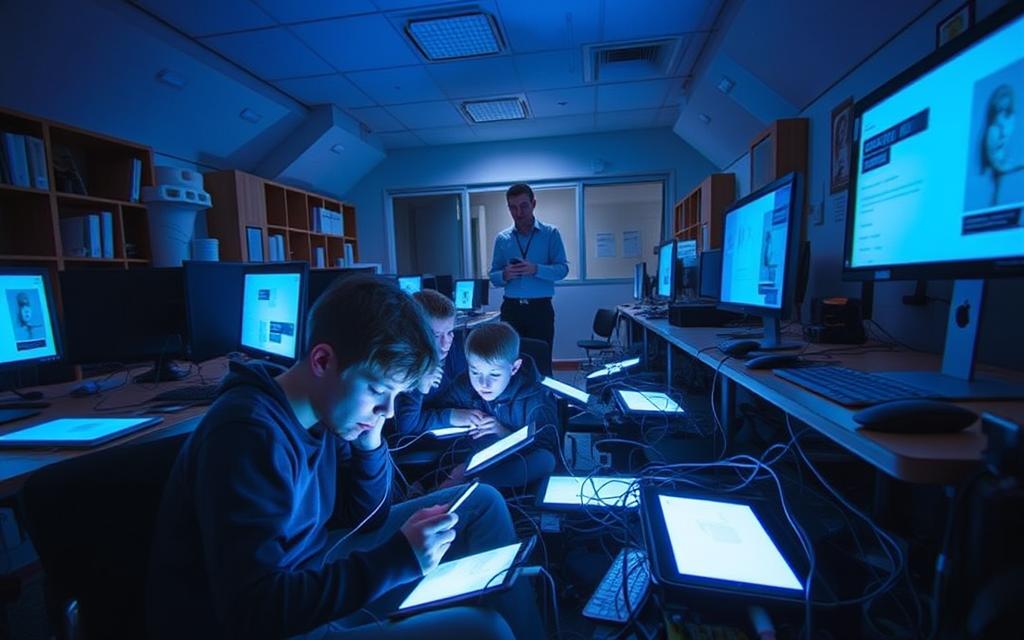
Digital learning environments have become a big challenge for schools today. Technology brings great tools for learning, but it also brings distractions. This section looks at how constant online distractions affect learning.
Multitasking and Divided Attention
Many students think they can handle many tasks at once. But research shows this isn’t true. Our brains can’t really focus on more than one thing at a time.
Attention spans have dropped from 12 seconds to 8 seconds with the rise of technology. This makes it harder to remember information and do well in school. Students who focus on one thing learn more than those who jump between tasks.
Common multitasking behaviours include:
- Checking social media during lectures
- Browsing unrelated websites while completing assignments
- Simultaneous messaging and content consumption
Notification Overload and Constant Interruptions
Digital devices keep sending notifications, breaking students’ focus. Each alert, from messages to emails, disrupts their concentration. It takes about 23 minutes to get back to focus after each distraction.
These constant interruptions cause “attention residue.” Even when trying to focus, students are partially distracted. This makes learning less effective and harder to remember.
Notification management strategies include:
- Scheduled device-free study periods
- Application-specific notification blocking
- Designated technology breaks between study sessions
Social Media’s Disruptive Influence
Social media is a big distraction in learning. It’s designed to keep users engaged, leading to compulsive checking. This disrupts study time.
Students check social media about 9 times during study sessions. Each visit makes it harder to focus and remember information. The emotional pull of these platforms makes it tough to stay focused on schoolwork.
Platform-Specific Distraction Patterns
Different social media platforms distract in different ways. Instagram and TikTok keep users scrolling for hours. Twitter’s fast updates encourage frequent checks.
Facebook and Snapchat focus on keeping up with friends, creating FOMO. Each platform needs its own strategy to help students stay focused.
Time Management Challenges
Digital distractions make it hard for students to manage their time. What starts as a quick check can turn into hours of unproductive time. Students often underestimate how much time they spend on non-academic activities.
Effective strategies include:
- Time-tracking application usage
- Scheduled social media access windows
- Digital mindfulness practices
These methods help students understand their digital habits. They learn to manage their time better for school success.
Technology Dependency and Its Educational Consequences
Modern education is facing a big challenge. Students are relying more on digital tools for learning. This has big effects on their education, going beyond just grades.
The Rise of Digital Reliance Among Students
Today’s students are more dependent on digital tools for school. Studies show 87% of secondary students use digital devices right away when they get stuck. This shows a big change in how they solve problems.
At first, tech was thought to make learning better. But now, it’s making a generation rely on devices for basic thinking. This is seen in many ways:
- Students check devices for simple math
- They need to be connected to finish tasks
- They feel less confident solving problems on their own
- They get anxious without their devices
Impaired Problem-Solving Skills
Technology use is hurting students’ problem-solving skills. The easy access to answers online makes them avoid the hard work needed to solve problems well. They don’t practice the deep thinking needed for strong problem-solving.
Researchers say students don’t keep trying when faced with tough problems. They prefer to find quick answers online instead of putting in the effort. This is a worrying sign for their future in school and work.
Reduced Critical Thinking Abilities
Critical thinking means evaluating information and making connections. But tech use is making students focus on quick answers over deep understanding. They learn just enough to pass, not to really understand.
This means they don’t question the truth of what they find online. They accept it without checking. This is different from the old way of learning through debate and analysis.
Over-reliance on Search Engines
Search engines are now the main way students find information. This makes them rely too much on tech. They see search engines as a shortcut, not as a tool for learning.
Having answers right away makes them less likely to remember what they learn. They learn how to search, not how to remember. This changes how they learn and understand information.
Decline in Memorisation Skills
Memorisation skills are getting worse because of tech use. With all the info online, students don’t need to remember as much. Research shows a 40% drop in students’ ability to recall facts.
This decline affects how they learn in the long run. Memorising helps build the brain’s ability to think deeply. Without this, students struggle with complex ideas.
| Cognitive Skill | Pre-Digital Era | Current Digital Era | Percentage Decline |
|---|---|---|---|
| Factual Recall | High proficiency | Moderate proficiency | 42% |
| Problem Analysis | Extended engagement | Quick solution seeking | 37% |
| Information Synthesis | Strong integration skills | Fragmented understanding | 45% |
| Critical Evaluation | Thorough scrutiny | Surface-level acceptance | 39% |
To deal with tech dependency, we need to find a balance. We should use tech wisely while keeping important thinking skills sharp. Teachers should find ways to make students think for themselves, even with tech around.
Cognitive Development Concerns
Technology affects more than just classroom distractions. It impacts how we learn and think. This is a big worry for teachers and parents.

Attention Span Reduction
Today’s classrooms face a big problem: shorter attention spans. Studies show that too much digital stuff changes how our brains work. It makes it hard to focus for long.
Students who are used to quick changes find it tough to concentrate on hard tasks. This affects their reading and thinking skills a lot.
A study found that too much tech use lowers brain activity for focus. This is bad news for school grades.
Memory Formation and Retention Issues
Easy access to info might hurt how we remember things. If answers are online, we don’t try as hard to remember.
This makes us rely too much on tech. Our brains, like the hippocampus, work differently if we’re always online.
Students remember less when they know they can look it up later. This changes how we learn and remember.
Impact on Deep Learning Processes
Too much tech can stop us from really learning. True understanding needs effort, which quick answers don’t give.
Learning deeply means struggling and trying hard. But tech can make it too easy, skipping this important step.
Teachers see students wanting quick answers more than deep thinking. This is a big worry in today’s schools.
The key is to use tech wisely. We need to keep the important learning skills that make us grow.
Psychological Effects on Students
Students’ mental wellbeing is under threat in today’s digital world. The effects of technology in schools go beyond grades. They touch on students’ health and growth. It’s vital for educators and parents to take notice.
Increased Anxiety and Stress Levels
Students face new pressures from being always connected. The need to reply quickly to messages and tasks causes ongoing worry. Many feel they’re always available, even when they’re supposed to relax.
Academic stress is made worse by digital tools. Systems that track progress and give instant feedback can make students anxious. They feel like they’re being watched all the time, not just during tests.
Digital Fatigue and Burnout
Too much screen time leads to mental tiredness, or digital fatigue. The brain gets overwhelmed by the constant flow of information. This can make students less focused and more irritable.
When students are overwhelmed by digital tools, they can burn out. Managing many apps and platforms is exhausting. Young minds can’t handle the mental load.
Sleep Disruption Patterns
Technology use can mess with students’ sleep. Screen time in the evening can hurt their grades the next day. Studies link device use to sleep issues.
Blue Light Exposure Effects
Screen light can stop the brain from making sleep hormones. This makes it hard for students to fall asleep, even when they’re tired. Their sleep quality and memory processing suffer.
Bad sleep can hurt how well students learn. It disrupts the deep sleep needed for memory and learning. This affects their grades and overall health.
24/7 Connectivity Pressures
Always-on tech puts pressure on students to stay connected. They feel they must check messages and respond right away. This stops them from resting and recovering.
The line between school and personal time gets fuzzy. Students find it hard to stop thinking about school outside of class. This constant connection stops them from fully resting and processing.
“The always-on nature of educational technology creates a generation of students who never truly switch off from academic pressures.”
These effects are big challenges for today’s schools. Knowing about these issues helps teachers and parents find better ways to use technology. A balanced approach can help avoid harm while keeping the benefits of tech in education.
Social and Emotional Implications
Technology brings many benefits to learning, but it also has big social and emotional effects. These effects go beyond just grades, shaping how students connect with others and handle social situations.

Reduced Face-to-Face Interaction
Online learning means less time with people face-to-face. Students now spend more time staring at screens than talking to friends. This is known as “social displacement.”
Less time together can lead to:
- Not being able to read faces well
- Less practice in spontaneous talks
- Less chance to solve problems together
This change from real-life to digital spaces changes how students learn socially. Moments that used to happen in school halls and cafeterias are now lost.
Impaired Social Skill Development
Too much tech time hurts the growth of important social skills. Research shows that kids who spend too much time online learn social skills slower than their peers.
Skills like:
- Taking turns in conversations and listening well
- Reading nonverbal signs
- Handling conflicts
- Knowing what’s okay and what’s not
These skills are key for good relationships in life. When tech replaces people, students miss out on vital practice.
Digital Communication Versus Personal Connection
Talking online is different from talking in person. Online chats lack the depth and connection of face-to-face talks.
Key differences are:
- Less emotional context without body language
- Less feedback right away
- No shared space or presence
- More chance for misunderstandings
This makes it hard to develop emotional smarts—the skill to understand and manage feelings. Students who mostly talk online might find it tough to be empathetic and control their emotions.
The effects of too much tech in school need careful thought. While digital tools help learning, it’s important to keep human interaction for a well-rounded education.
Academic Performance Metrics
Research shows a link between too much tech use and lower grades. Studies show how digital tools affect learning in many ways.
Grade Point Average Correlations
Studies show a clear link between too much tech and lower grades. Both boys and girls see their grades drop when they use tech too much.
A big study in 2023 found a big difference in grades. Students who used screens for more than 4 hours a day had lower GPAs. This was true even when their family’s money and past grades were considered.
- It can distract from studying
- It makes it hard to remember things when you’re doing many things at once
- It can mess with sleep, which affects how well you think
- It can make you less interested in what’s happening in class
Standardised Test Score Analysis
Standard tests also show tech’s impact on learning. The results are worrying for those who use tech a lot.
Tests in math and reading show a big drop in scores for heavy tech users. Students with no limits on their devices do 12% worse in problem-solving tests.
This drop is biggest in tasks that need focus and thinking deeply. Students who are used to tech do better with it but struggle with old-fashioned tests.
Assignment Completion Rates
Distractions from tech make it harder to finish and on time. About 28% of students miss deadlines because of tech.
Even though tech can do more, the work it produces is often not as good. Students tend to rush their work instead of doing it well.
Quality Versus Quantity in Digital Work
While tech lets you do more, it often means the work is not as good. Digital work often lacks:
- Deep research because of quick internet searches
- Original ideas and analysis
- Too much use of templates and pre-made answers
- Poor editing and proofreading, even with tools
Teachers say digital work often lacks the depth and thoughtfulness of handwritten work. The ease of tech can sometimes hurt learning.
Plagiarism and Academic Integrity Issues
Technology has made it harder to keep learning honest. There’s been a 45% rise in cheating cases, thanks to better AI tools and easier access to content.
Common cheating issues include:
- Copying from the internet without giving credit
- Using paraphrasing tools that hide the source
- Submitting AI-written work as your own
- Getting someone else to do your work online
This is a big problem for schools trying to keep learning honest while using tech.
Classroom Management Challenges
Today’s teachers face new challenges with digital devices in classrooms. Tablets, laptops, and educational software change how we learn. They need new ways to keep learning spaces productive.
Teacher Authority and Control Issues
Digital devices change who has power in class. Students with tech skills may question teacher authority. This makes teaching and discipline harder.
Teachers find it tough to control classes with technology around. Students can easily find information online, making teachers less central. Teachers must find new ways to manage classes.
Monitoring Digital Device Usage
Watching how students use technology is hard. Teachers must keep learning on track and stop distractions. It’s hard to tell what’s work and what’s not.
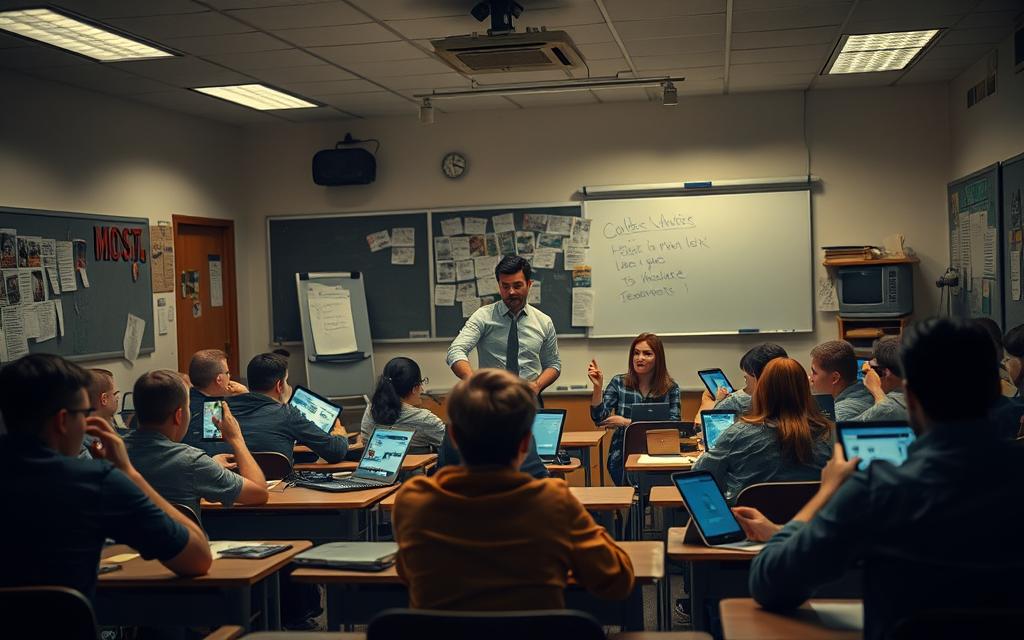
Students often use apps and social media when they shouldn’t. They switch between work and fun apps a lot. This makes learning less effective.
Creating Effective Digital Boundaries
Setting clear rules for technology use is key. Rules should cover when and how to use devices. They must help learning without getting in the way.
Rules work better when students help make them. Teachers say students follow rules more when they help set them. This makes students more responsible with technology.
| Management Aspect | Traditional Classroom | Technology-Enhanced Classroom | Key Challenges |
|---|---|---|---|
| Attention Monitoring | Visual observation of engagement | Screen content verification required | Multiple applications running simultaneously |
| Behaviour Correction | Direct verbal intervention | Device management software needed | Technical solutions sometimes ineffective |
| Resource Control | Physical material distribution | Digital access management | Unauthorised website and app usage |
| Time Management | Structured lesson timing | Technology transition periods | Device setup and technical issues |
Teachers need ongoing training to handle these challenges. Schools must support teachers with training and tools. Classroom management keeps evolving with technology.
Mitigation Strategies and Best Practices
Technology’s negative effects can be lessened with careful planning. This ensures learning benefits are kept while avoiding harm. By doing this, we create digital spaces where education thrives without distractions.
Structured Technology Usage Policies
Schools need clear rules for using technology. These rules should say when devices are okay and what happens if they’re not used right.
Good policies often include:
- Device-free zones in classrooms and common areas
- Scheduled technology breaks during school hours
- Clear consequences for inappropriate device usage
- Teacher training on policy enforcement
Digital Literacy Education
Students must learn to use technology wisely. This education is more than just knowing how to use devices. It’s about thinking critically about what they find online.
Good digital literacy programmes teach:
- Identifying credible online sources
- Understanding digital privacy and security
- Recognising online manipulation techniques
- Developing healthy digital habits
Balanced Integration Approaches
Technology should enhance, not replace, traditional teaching. This balance keeps human interaction alive while using digital tools.
This approach values:
- Combining digital and hands-on learning activities
- Using technology for specific educational purposes only
- Maintaining face-to-face interaction as primary
- Regularly evaluating technology’s educational value
Screen Time Management Techniques
The American Academy of Pediatrics suggests screen time limits based on age. These guidelines help prevent too much screen time and support healthy growth.
Effective management includes:
- Age-appropriate daily screen time limits
- Scheduled device-free family times
- No screens during meals or before bedtime
- Regular digital detox periods
Focus Enhancement Methods
There are ways to stay focused despite digital distractions. These strategies help students concentrate better, even with technology around.
Successful methods include:
- Pomodoro technique for timed focus sessions
- Single-tasking instead of multitasking
- Digital mindfulness exercises
- Physical activity breaks between screen sessions
Parental Involvement Strategies
Parents are key in teaching healthy tech habits. Working together with schools, they ensure kids learn the right way to use technology.
Effective parental strategies include:
- Using parental control software appropriately
- Modelling healthy technology behaviours
- Discussing online experiences regularly
- Creating technology contracts with children
These strategies together create better learning environments. When used consistently, they help students have a healthy relationship with technology that supports their education.
Conclusion
Our detailed study shows big problems in today’s schools because of digital distractions and addiction. It’s clear that technology can hurt learning if not used right.
This conclusion highlights that digital tools aren’t bad by themselves. Their effect on learning depends on how they’re used and managed in schools.
To make technology work well in schools, we need a balanced approach. This means finding ways to use digital tools that help learning without causing harm. Teachers, parents, and students must work together to make this happen.
Our research shows that we need to keep studying and updating our strategies. This will help us tackle these issues as they change.
Using technology wisely is key to improving education. When done carefully, it can make learning better for students everywhere.
