


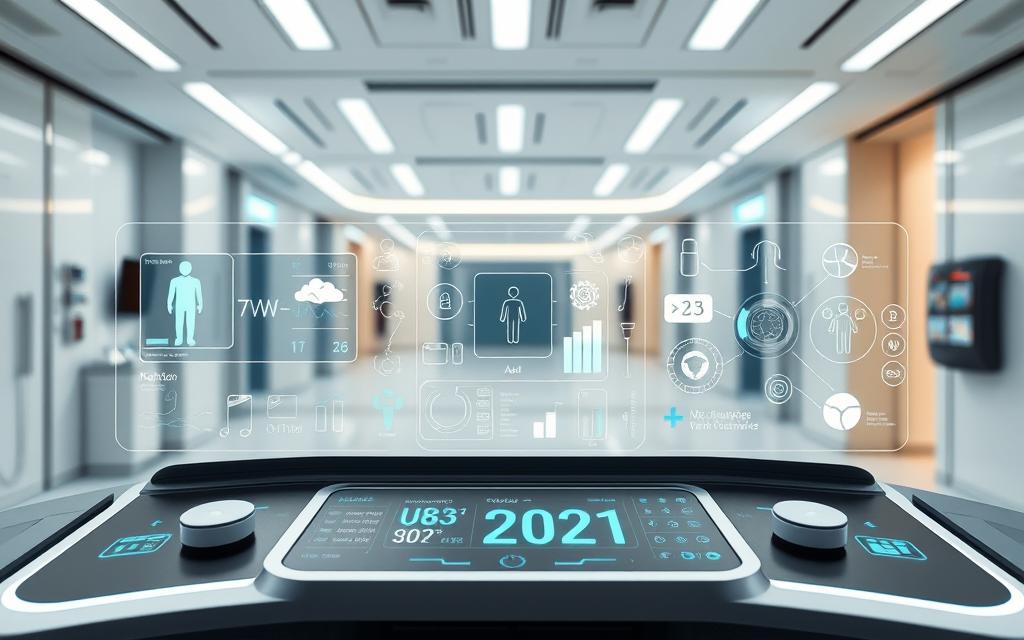
Health Information Technology is a system that includes hardware, software, and systems. It helps run today’s medical practices. It manages all patient data in the healthcare world.
HIT is all about managing medical records well. It covers collecting, storing, and analysing data. It also lets doctors share information safely.
Digital healthcare systems are key to today’s medicine. They help doctors get patient info fast. This leads to better care and teamwork.
Using health IT right changes how doctors work. It makes care safer, treatments better, and work more efficient. It’s a big win for healthcare.
Understanding Health Information Technology: A Complete Guide
Health information technology is the digital heart of today’s medicine. It changes how we collect, store, and use patient data in healthcare. This guide looks at the key parts of HIT systems that have changed how we work and care for patients.
Defining Health Information Technology
Health information technology uses medical hardware and healthcare software to manage health info well. It helps keep patient data safe and lets it be shared among healthcare teams.
HIT does more than just keep records. It also uses data analysis systems for making decisions and managing health on a bigger scale. NCBI Bookshelf says users are not just doctors and patients but also researchers and insurance companies.
The Evolution of HIT in Modern Healthcare
The shift from paper to digital records is a big change in health information technology. Early systems were mainly for admin tasks. Now, they handle clinical, financial, and operational data all at once.
Related Posts:




The HITECH Act of 2009 helped by giving money to those who use electronic health records. Cloud computing and mobile tech have also made HIT better, allowing for quick data access and monitoring patients from afar.
Key Components of Health Information Systems
Today’s health info systems have important parts that work together:
- Server infrastructure and database management systems
- Clinical applications for various medical specialties
- Secure network connectivity and data transmission protocols
- User interfaces tailored to different stakeholders
- Backup and disaster recovery mechanisms
These parts help different users like doctors, managers, patients, and researchers. The mix of medical hardware and healthcare software makes systems that can handle big data analysis tasks safely and follow rules.
What Does Health Information Technology Mean in Contemporary Practice
Health information technology is the digital heart of today’s healthcare. It changes how doctors and nurses handle patient data. Unlike old ways, new HIT systems fit right into daily work, making data management and analysis better than ever.

The Core Purpose of HIT Systems
Health information technology has key roles in today’s healthcare world. It aims to make healthcare better by improving data access and making things run smoother.
According to NCBI Bookshelf, HIT was created to make healthcare more accountable and efficient. It also aims to lower costs and improve patient care.
Differentiating HIT from Traditional Medical Records
Digital medical records are a big step up from paper ones. Paper records had problems like being hard to store and read.
Modern HIT fixes these issues by making records easy to access and share. It also keeps data safe and makes sure it’s always there when needed.
The Scope of Health Information Technology Applications
Health information technology does more than just keep records. It touches many areas of healthcare, making it better and more efficient.
| Application Area | Primary Function | Impact on Healthcare |
|---|---|---|
| Electronic Health Records | Comprehensive patient data management | Centralised information access |
| Revenue Cycle Management | Billing and claims processing | Financial efficiency improvement |
| Clinical Research | Data aggregation and analysis | Accelerated medical discoveries |
| Public Health Surveillance | Population health monitoring | Early outbreak detection |
| Patient Engagement Platforms | Direct communication tools | Improved care coordination |
This wide range of uses shows how vital health information technology is. It helps make healthcare more coordinated, efficient, and effective for everyone.
Electronic Health Records: The Foundation of Modern Patient Data Management
Electronic Health Records (EHRs) are key in today’s healthcare. They have changed how we store and use patient data. Now, digital systems replace paper records, making care better and more efficient.
EHR Systems Architecture and Design Principles
Today’s EHR systems have a complex design. They include databases, application layers, and user interfaces. The database holds patient data, the application layer processes it, and the user interface makes it easy to use.
Designs focus on being easy to use, secure, and able to grow. They must handle more data without slowing down. EHRs should fit into medical workflows, not get in the way.
Interoperability Standards and Data Exchange Protocols
Interoperability in healthcare is a big challenge. Different systems need to talk to each other. HL7 FHIR standards are the new way to share clinical data.
FHIR uses web technologies like RESTful APIs, making it easier to use. It helps systems like EHRs, labs, and more share data in real-time. This keeps patient information accurate and up-to-date.
Clinical Documentation Improvement Through EHR Implementation
Good EHR systems make clinical notes better. They check for errors and make data entry easier. This means patient records are more accurate.
Having all medical history helps doctors make better choices. EHRs make it easy to update records. This keeps patient care safe and effective.
As one researcher says:
“With EMRs now widespread, data within an organisation can now be retrieved from an electronic data warehouse instantaneously.”
This quick access to patient data is a big step up from old ways. It helps doctors give better care.
Patient Data Security and Privacy Considerations in HIT
Digital transformation is speeding up in healthcare, making it vital to protect patient data. The move from paper to digital records has widened the risk of healthcare data security breaches. It’s now more important than ever to have strong security measures to keep patient trust and follow the law.

Healthcare providers need to create strong security plans. These plans must tackle both tech issues and human mistakes. Without good protection, there could be big fines, damage to reputation, and most importantly, harm to patient safety.
HIPAA Compliance Requirements for Healthcare Organisations
The Health Insurance Portability and Accountability Act sets the rules for protecting patient info in the US. HIPAA regulations require covered entities to use strong security measures for patient data.
Organisations must do regular risk checks, make clear privacy policies, and train staff on handling sensitive data. They need to have documented steps for managing access, storing, and sending data securely.
Data Encryption and Access Control Measures
Strong data encryption is key to stopping unauthorised access to patient records. Healthcare groups should encrypt data both when it’s stored and when it’s being sent between networks.
Using multi-factor authentication and access controls based on roles helps ensure only the right people can see or change patient info. These tech steps, along with physical security, protect against many threats.
Breach Prevention and Incident Response Strategies
Keeping an eye on security and doing regular system checks helps find and fix problems before they happen. Healthcare groups should use advanced systems to spot and stop attacks early.
The 2016 ransomware attack on Hollywood Presbyterian Hospital showed how important it is to have a good plan for dealing with incidents. Good plans include quick action, telling people about breaches, and getting back to normal as fast as possible.
It’s also key to keep staff trained on security. Many data breaches happen because of human mistakes. Doing practice drills helps make sure everyone is ready for real breaches.
Clinical Decision Support Systems: Enhancing Patient Care Through Technology
Clinical decision support systems are advanced health tech that help doctors make better choices. They use patient data and vast medical knowledge to give real-time advice. This advice is tailored to each patient’s needs.
Algorithm-Based Clinical Guidance Tools
Today’s clinical decision support tools use smart algorithms to understand patient data. They offer insights that doctors can act on. These tools suggest tests, treatments, and spot care gaps.
These tools are fast and can handle huge amounts of data. This means doctors can avoid mistakes and give patients the best care.
Medication Management and Allergy Alert Systems
CDSS plays a key role in keeping patients safe from medication errors. It has medication safety alerts that warn of dangers. It checks for drug allergies and bad interactions.
Studies show that these systems can cut down on medication mistakes. This is a big win for patient safety.
Evidence-Based Practice Integration in CDSS
The best CDSS systems rely on the latest medical research. They update with new studies and guidelines. This keeps the advice doctors get up to date.
Healthcare teams can set these systems to fit their own rules. But they must follow national standards too. This ensures care is consistent and high-quality.
These systems keep getting better as new research comes out. This makes them a powerful tool for doctors. They are a big step up from old reference books.
Health Information Exchange: Facilitating Seamless Data Sharing
Electronic health records have changed how we manage data for each patient. But, to really transform healthcare, we need to share information smoothly across different places. Health information exchange (HIE) is key to making this happen. It lets doctors and other healthcare workers share patient data safely across different systems.

Regional Health Information Organisations
Regional Health Information Organisations (RHIOs) are at the heart of local health data sharing. They bring together hospitals, clinics, labs, and more in a specific area. This helps create common rules and tech for sharing data.
RHIOs set up the tech and rules for safe data sharing. They also make sure everyone follows privacy laws. They act as a middle ground, helping different healthcare groups share patient info for better care.
Standardised Data Formats and Terminology Systems
For health data to be shared easily, we need common standards. Using FHIR (Fast Healthcare Interoperability Resources) has made sharing data easier. It helps different systems talk to each other.
SNOMED-CT and LOINC are systems that use standard codes for medical info. This means data shared between systems keeps its meaning and context, no matter where it comes from.
Barriers and Solutions in Health Information Exchange
Even though sharing health info is good, there are big challenges. Technical issues like different systems and data standards are big problems. Money is also a big issue, from the cost of setting up systems to keeping them running.
Privacy laws and competition between healthcare groups can also be obstacles. Changing how things are done can be hard for people too.
| Barrier Category | Specific Challenges | Potential Solutions |
|---|---|---|
| Technical | System incompatibility, legacy systems | API integration, middleware solutions |
| Financial | Implementation costs, sustainability | Government incentives, shared funding models |
| Regulatory | Varying privacy laws, compliance complexity | Standardised policies, consent management tools |
| Organisational | Competitive concerns, workflow disruption | Collaborative governance, change management |
There are ongoing efforts to solve these problems. Better tech standards, government help, and building trust between groups are key. As health information exchange keeps improving, we’ll see better, more connected healthcare.
Telehealth and Remote Patient Monitoring Technologies
Telehealth technology is changing how we get healthcare. It helps reach more people and makes health care better. It moves from old clinic visits to ongoing health checks.
Remote monitoring systems track health in real time. This helps doctors act fast and keeps people out of the hospital.
Virtual Consultation Platforms and Their Data Requirements
Virtual consultations need strong tech to work well. They need:
- Fast internet for clear video
- Good audio for clear talks
- Safe text chats
- Tools for booking and billing
These systems must keep data safe and follow privacy laws. They make sure talks with patients go smoothly.
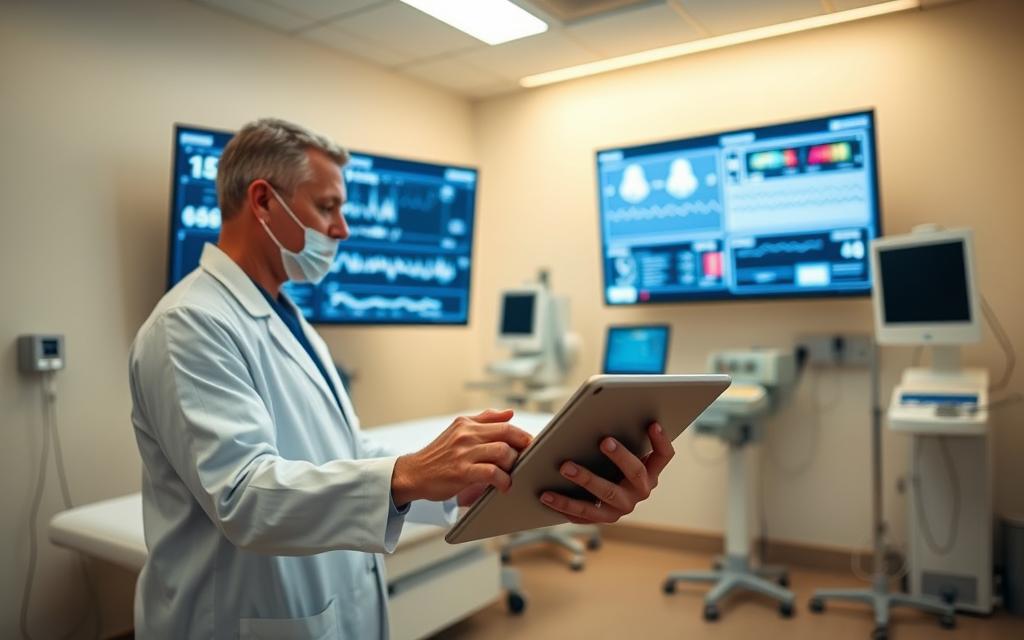
Wearable Devices and Continuous Health Data Collection
Wearable devices are changing how we prevent illness. They track:
- Heart beats and how well it’s working
- Blood sugar for diabetics
- How active you are and how well you sleep
- How much oxygen you have and how fast you breathe
These devices send data to doctors automatically. This gives a full picture of health, not just what’s seen in clinics.
Integration of Remote Data into Centralised Health Records
Remote monitoring really shines when it’s part of EHRs. Data from devices goes straight into patient records. This lets doctors see trends and recent data together during online chats.
As a healthcare tech expert says:
HIT lets healthcare teams share info fast when a note or test result is added.
This makes remote monitoring data key for doctors’ decisions. It’s not just extra info.
Data Analytics and Population Health Management
Modern healthcare uses advanced data analytics to change patient care on a big scale. It looks at patterns in whole communities, not just individual records. This helps in planning health interventions and using resources wisely.

Predictive Analytics for Patient Risk Stratification
Healthcare groups use predictive risk modelling to spot patients at risk of serious health issues. They look at past data, lifestyle, and health signs to sort people by risk.
This way, they can help those at high risk early on. Patients get care plans made just for them, based on their risk level. This makes care better and uses resources well.
Population Health Trends and Pattern Recognition
Population health management tools find health trends in communities. They look at big data to spot disease outbreaks and track chronic conditions.
As studies show, these tools help with everything from disease tracking to chronic disease monitoring. This helps in public health efforts and keeping communities healthy.
Quality Metrics and Performance Improvement Initiatives
Data analytics help improve healthcare quality by setting clear goals. Healthcare groups set standards for care, safety, and how well things run.
They check these standards often to see where they can get better. This way, they keep care at a high level.
| Population Health Metric | Measurement Frequency | Improvement Target | Data Source |
|---|---|---|---|
| Chronic Disease Prevalence | Quarterly | 5% reduction annually | EHR systems |
| Preventative Screening Rates | Monthly | 15% increase yearly | Clinical databases |
| Hospital Readmission Rates | Weekly | Below national average | Admission records |
| Patient Satisfaction Scores | Bi-annually | 90% positive feedback | Survey systems |
Healthcare data analytics changes how care is given to many patients. It uses predictive models, trend analysis, and quality checks. This makes care more effective and efficient for all.
Regulatory Frameworks Governing Health Information Technology
Health information technology is shaped by many rules to ensure it’s safe and works well. These HIT regulations have changed a lot. Back in the early 2000s, there was a big push to get all US healthcare places using computerised systems by 2010.
Meaningful Use Requirements and Incentive Programmes
The Meaningful Use programme was a big deal in US healthcare. It started in 2009 and offered money to healthcare places that used electronic health records well. These records had to meet certain standards to improve patient care.
Healthcare providers had to show they were using these systems to better coordinate care and engage patients. They also had to keep patient data safe and private. The programme got tougher over time, asking for more data and advanced care processes.
MIPS and Alternative Payment Models in the US Healthcare System
The Merit-based Incentive Payment System (MIPS) is another key rule for health tech. It was set up in 2015 as part of the MACRA law. MIPS links Medicare payments to how well healthcare places do in four areas.
These areas are quality, improving care, sharing data, and keeping costs down. Places need to use their tech to show they’re doing well in these areas. This system helps move healthcare towards value-based care, not just paying for services.
FDA Regulations for Medical Software and Digital Health Tools
The Food and Drug Administration (FDA) is important for medical software and FDA digital health tools. The FDA’s rules have changed to keep up with software-based medical products. This ensures patient safety.
The FDA sorts digital health tools by how they’re used and how risky they are. Tools that help diagnose or treat diseases need approval. But, the FDA has made it easier to regulate lower-risk tools with its Digital Health Innovation Action Plan.
Implementation Challenges and Best Practices for HIT Adoption
Introducing health information technology is a big challenge for organisations. It needs careful planning and a strategic approach. Moving from paper to digital systems costs a lot and changes how things work.
For HIT implementation to succeed, you must consider technology, people, and money. Just having the tech isn’t enough. You also need to change how things are done and who does them.
Workflow Integration and Change Management Strategies
Getting new systems to fit with current workflows is hard. Healthcare groups should map out their processes first. This helps spot where changes might cause problems.
Good change management means getting staff involved early. Explain how new systems will help. Having champions and super-users in departments can really help everyone get on board.
Staff Training and Digital Literacy Development
Good training is key to getting staff up to speed with new systems. At first, using an EMR can be slower than paper. But, with practice, it gets better.
Training should teach more than just how to use the system. It should also improve digital skills. Offer basic and advanced training, with ongoing support to help staff keep up.
Cost-Benefit Analysis and Return on Investment Considerations
The big hurdle is the high cost of setting up HIT. This includes buying software, setting up hardware, and paying for services. But, looking at the long-term benefits is important.
When calculating EHR ROI, think about both the money saved and the quality of care. Savings might come from less transcription and paper storage. Better care quality means safer patients, happier patients, and better health outcomes.
Do a detailed cost-benefit analysis for 3-5 years. Remember, there might be a dip in productivity at first. But, with time, things get more efficient and cheaper.
Future Trends and Innovations in Health Information Technology
The world of health information technology is changing fast. New technologies are set to change how we care for patients. They promise better data security, more accurate diagnoses, and treatments that fit each person’s needs.
Artificial Intelligence and Machine Learning Applications
Artificial intelligence in healthcare is becoming a reality. Machine learning helps doctors with medical images, disease prediction, and big data analysis. It spots things humans might miss.
These systems handle lots of patient data for quick advice. They also make admin tasks easier. This lets doctors spend more time with patients.
Blockchain Technology for Enhanced Data Security
Blockchain for health data is a big change. It makes sure medical info is safe and shared right. This tech keeps data safe and clear for everyone in healthcare.
Patients have more control over their health records. Doctors get secure, reliable data. This makes it hard for anyone to change medical info without permission.
Personalised Medicine and Genomic Data Integration
Personalised medicine uses genetic info for custom treatments. Genomic data in health records helps doctors plan care that fits each patient. This is a big step from general treatments to ones made just for you.
Studies from the National Institutes of Health show better treatments and fewer side effects. This is thanks to using genetic data in care plans.
These new technologies offer big chances to make healthcare better, safer, and more efficient. They keep patient data safe and secure.
Conclusion
This detailed look at health information technology shows its huge impact on today’s healthcare. HIT is key to making medicine data-driven, changing how we handle and use patient data.
As NCBI Bookshelf points out, HIT is vital for better health results and care quality. It helps patients by making care easier and less about paperwork.
Looking at electronic health records, data safety, clinical support, and telehealth shows HIT’s wide benefits. Despite challenges, it boosts patient safety, makes care smoother, and helps manage health better.
The future of HIT looks bright with AI, blockchain, and tailored medicine. With ongoing innovation and smart use, HIT will lead to better, more focused healthcare for all.
