


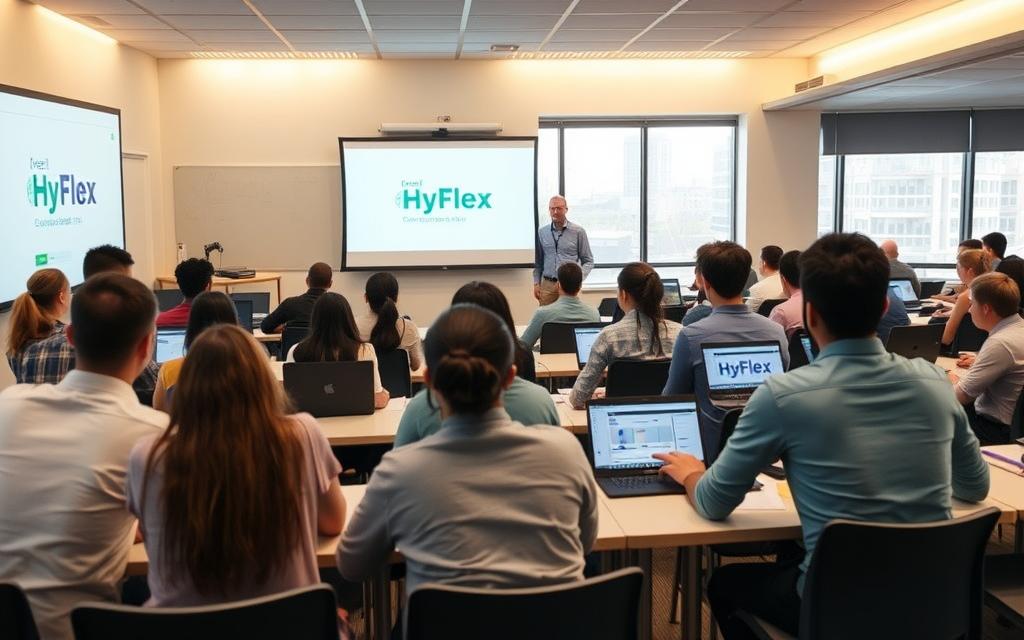
Modern education needs new ways to meet different student needs. The hyflex definition is a big step forward. It mixes hybrid and flexible learning.
This method lets students pick how they learn. They can be in class, join online live, or learn on their own time. Every way leads to the same learning goals.
Columbia University shows how well it works. It keeps learning quality high while being very flexible. This is what the future of learning looks like.
Hybrid flexible learning is a great answer to today’s education problems. It fits with various schedules, learning styles, and situations. And it doesn’t lose focus on academic standards.
Understanding HyFlex Technology
HyFlex is a new way to learn that mixes the best of both worlds. It lets schools teach students in person and online at the same time. This makes learning more flexible and open to everyone.
Definition and Core Principles
HyFlex technology lets students choose how they learn. They can go to class, learn online live, or watch recordings later. It’s based on four key ideas by Brian Beatty in 2019:
- Learner Choice: Students pick how they learn based on what they need
- Equivalence: All ways of learning are just as good
- Reusability: Materials work well for all types of learning
- Accessibility: Everyone can access the learning materials they choose
These hyflex core principles make sure learning is top-notch but flexible. It meets the needs of today’s learners who have busy lives and different learning styles.
Historical Context and Evolution
The history of hyflex shows it grew from earlier ideas in education. It started with projects that mixed online and in-person learning, like a big one in Australia in 2013.
Teachers saw that old hybrid learning models didn’t work well for everyone. HyFlex changed this by making a space where all students feel included and valued.
Related Posts:
- The Negative Effects of Technology on Education…

- What Drives Technology The Forces Behind Innovation

- How Technology Has Impacted Business The Digital…

- How Technology Affects Social Interaction Changing…

- What Is Advanced Imaging Technology Beyond X-Rays and MRI
- What Is Wearable Technology Devices for Health and…

“HyFlex courses provide a robust framework for designing learning experiences that work for diverse student populations.”
HyFlex became even more important when schools had to switch to online learning. It showed it’s not just a quick fix but a lasting change in how we teach. Schools all over the world see HyFlex as the future of learning.
Key Components of HyFlex Learning Models
HyFlex technology is built on two main parts: live interaction and flexible learning. These parts work together to meet different student needs and preferences.
Synchronous Learning Elements
Synchronous parts are the live, real-time part of HyFlex. They allow students and teachers to interact instantly, no matter where they are. This part is great for building a community and getting feedback right away.
Essential Tools for Real-Time Interaction
For real-time interaction, we need strong technology. Tools like Zoom and Microsoft Teams are key for live lessons. They help with face-to-face talks, sharing screens, and group work.
Other tools include virtual whiteboards, polls, and small group rooms. These make learning active and engaging, not just watching.
“The magic happens when technology becomes invisible and human connection takes centre stage in digital learning spaces.”
Asynchronous Learning Elements
Asynchronous parts offer the flexibility that makes HyFlex special. They let students learn at their own pace and time. This freedom is a big plus.
Resources for Self-Paced Study
Learning Management Systems like Moodle and Canvas hold most of the asynchronous resources. They make it easy to find and use course materials. This helps students learn better and remember more.
Common resources include video lectures, readings, forums, and self-tests. These tools let learners manage their learning journey while keeping it challenging.
The table below shows how synchronous and asynchronous parts work together in HyFlex models:
| Component Type | Primary Tools | Key Features | Student Benefits |
|---|---|---|---|
| Synchronous | Zoom, Microsoft Teams | Live video, real-time chat, screen sharing | Immediate feedback, social connection |
| Asynchronous | Moodle, Canvas, CourseWorks | Recorded lectures, discussion forums, digital resources | Flexible scheduling, self-paced learning |
| Integrated | LMS with video integration | Single sign-on, unified calendar, combined analytics | Seamless experience, reduced technical barriers |
The mix of synchronous tools and asynchronous resources makes a strong learning system. It ensures all students can learn well, no matter how they choose to participate.
Benefits of Adopting HyFlex Technology
When schools use HyFlex technology, they see many benefits. This new way of learning helps both students and the school. It makes learning more flexible and better for everyone.
Advantages for Students
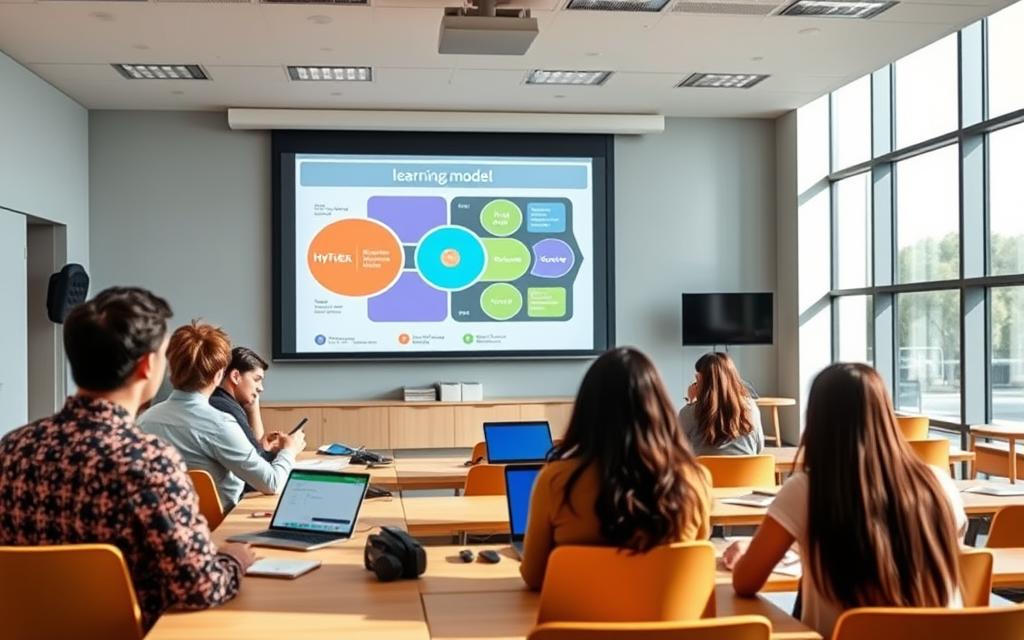
HyFlex gives students more control over their learning. They can choose how they want to learn, whether in class or online. This is great for those who have to work or take care of family.
Students can switch between being in class and learning online. This is very helpful for those with busy lives. It lets them learn in a way that works best for them.
HyFlex also helps students who are shy or prefer not to speak up. They can use online tools like chat to join in. This makes learning more comfortable for them.
North Carolina Central University shows how HyFlex helps different students. They offer both in-person and online learning. This makes sure everyone can join in.
Advantages for Educators and Institutions
Schools get many benefits from using HyFlex. It helps them keep teaching even when things change or get disrupted. This is very important for keeping education going.
HyFlex also lets schools reach more students. They can teach students who can’t come to class because of where they live. This is a big help for schools.
Teachers get better at teaching online and reach more students. This makes learning more interesting and challenging. It also helps schools stay up-to-date with new ways of teaching.
| Stakeholder Group | Primary Advantages | Impact Level | Implementation Example |
|---|---|---|---|
| Students | Flexible participation, personalised learning, inclusive engagement | High individual impact | Chat participation for shy learners |
| Educators | Broader reach, digital skill development, pedagogical innovation | Medium organisational impact | Hybrid assessment methods |
| Institutions | Operational resilience, adaptability, expanded market reach | High strategic impact | North Carolina Central University model |
| Administrative Staff | Streamlined operations, resource optimisation, system integration | Medium operational impact | Unified platform management |
The benefits of hyflex make things better for everyone. Students stay in school longer, and schools grow and improve. This is a win-win situation.
HyFlex is becoming more popular in schools. It’s a big step towards making education more flexible and welcoming for everyone.
Challenges in HyFlex Implementation
HyFlex learning brings great flexibility, but it also comes with big challenges. Schools need to plan carefully and find smart solutions to make it work well.
Technical and Infrastructural Hurdles
Schools face many technical problems with HyFlex. They need good cameras, microphones, and fast internet. But, they often can’t afford these upgrades.
Another big worry is if the technology fails. This can mess up both in-person and online classes. Columbia University showed how important it is to have backup plans for these issues.
Training teachers is also hard. They need to learn how to use new tech and software. Without this training, even the best tech can’t help students learn well.
Pedagogical and Operational Adjustments
Teachers have to change how they teach with HyFlex. They need to make course materials work for both in-person and online students. This takes a lot of time and creativity.
It’s hard for teachers to talk to students in class and online at the same time. Columbia University helped by hiring teaching assistants for online students.
How students are tested also needs to change. Old ways of testing don’t work well for HyFlex. Schools must create new ways to check if students are learning.
| Challenge Type | Specific Issues | Potential Solutions | Implementation Timeline |
|---|---|---|---|
| Technical Infrastructure | Equipment costs, internet reliability | Phased implementation, grant funding | 6-12 months |
| Faculty Development | Training requirements, resistance to change | Peer mentoring, incentive programmes | 3-6 months |
| Curriculum Design | Content adaptation, engagement strategies | Instructional design support, template development | 4-8 months |
| Operational Management | Scheduling conflicts, resource allocation | Dedicated support staff, clear protocols | 2-4 months |
To make HyFlex work, schools must tackle both tech and teaching issues. They need to spend money on equipment, training, and support. With good planning, these problems can be overcome.
Essential Technological Tools for HyFlex
The heart of a good HyFlex program is its digital tools. These tools make sure everyone, whether in class or online, gets a great learning experience. The right tech helps avoid problems and keeps everyone engaged.
Learning Management Systems like Moodle and Canvas
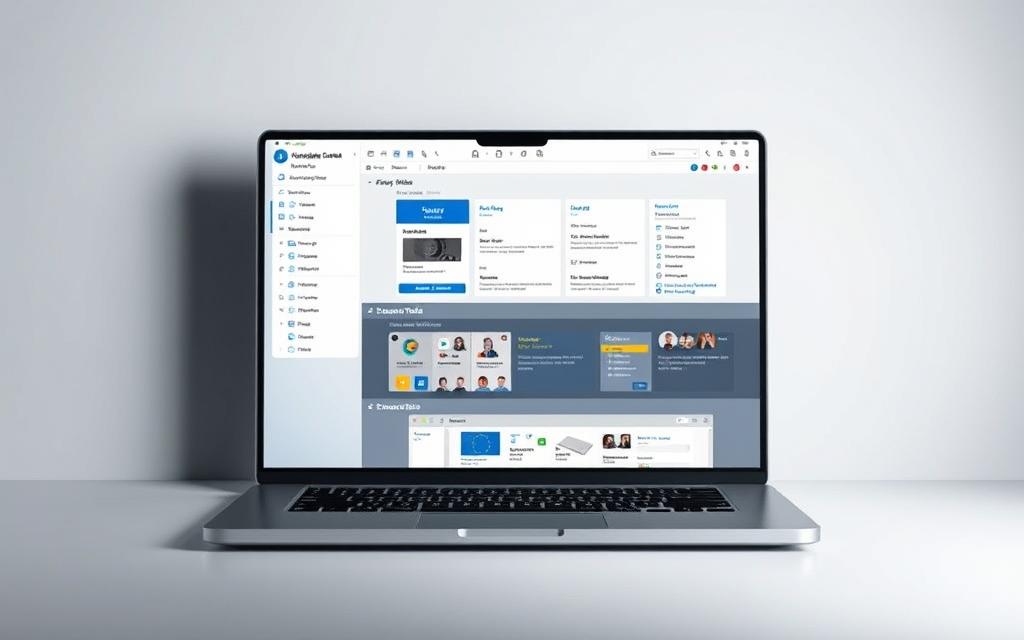
Learning Management Systems (LMS) are the main place for HyFlex courses. They have all the content, assignments, and resources you need, anytime. Moodle and Canvas are top picks because they’re flexible and have lots of features.
These systems help teachers organize materials and track how students are doing. For example, Columbia University uses CourseWorks for its HyFlex programs. An LMS works well with other tools, making a complete learning space.
- Content management for lectures, readings, and multimedia
- Assessment tools for quizzes and assignments
- Communication forums for student interaction
- Analytics to monitor participation and performance
The table below compares two leading LMS platforms:
| Feature | Moodle | Canvas |
|---|---|---|
| Cost | Open-source (free) | Subscription-based |
| Customisation | High | Moderate |
| Integration | Extensive plugins | Native app ecosystem |
| User Support | Community-driven | 24/7 institutional support |
Choosing the right LMS depends on what your school needs and can afford. Both Moodle and Canvas are solid choices for essential HyFlex technology.
Video Conferencing Platforms such as Zoom and Microsoft Teams
Video conferencing tools make it possible for real-time talks in HyFlex settings. They connect the physical and virtual classrooms. Zoom and Microsoft Teams are popular for their reliability and features.
These tools support live lectures, group talks, and office hours. Good audio and video are critical for keeping everyone engaged. Schools often add classroom tech like cameras and microphones.
Dartmouth College, for example, uses advanced tech with touch panels for switching views. This makes remote students feel part of the class. When picking a platform, consider:
- Ease of use for teachers and students
- Recording options for later use
- Breakout rooms for group work
- Security to keep sessions safe
Zoom is known for its easy-to-use interface and stable connections. Microsoft Teams works well with other Office 365 tools, making things easier. Both are essential HyFlex technology for live participation.
Using an LMS with video conferencing creates a full HyFlex system. This setup supports all learning styles well.
Designing Effective HyFlex Course Content
Creating engaging HyFlex learning experiences needs careful planning. The content must work well for both in-person and remote students. This section looks at how to develop and evaluate curriculum.
Strategies for Curriculum Adaptation
Hyflex course design starts with detailed session planning. Educators should outline each unit with clear goals and various ways to participate. This ensures all students get a fair education, no matter how they attend.
Columbia University suggests sharing materials before class. This helps students prepare, which is key for those who can’t ask questions in real-time.
It’s also important to make materials accessible. Content should be in different formats to suit different learning styles and tech levels. Here are some key adaptations:
- Video recordings with accurate captions
- Downloadable presentation slides
- Text-based summaries of key concepts
- Interactive digital worksheets
Clear instructions are vital. Both in-person and remote students need clear guidance on what’s expected, deadlines, and how to participate. Without clear instructions, students can get lost and lose interest.
Methods for Assessment and Feedback
Creating the right assessment methods is key. Traditional exams might not show what students have learned in HyFlex courses. Instead, use different ways to check if students understand the material.
Collaborative documents help students work together, whether in person or online. Tools like Google Docs let everyone edit and comment at the same time. This builds a sense of community and shows how students are doing.
Discussion boards are great for ongoing checks. They let students share ideas and learn from each other. Teachers can see how well students understand the material.
Interactive polls give quick feedback during live sessions. Tools like Mentimeter or Poll Everywhere let everyone join in. This helps teachers see if students get the material and adjust the lesson if needed.
“Inclusive assessment practices ensure no student is disadvantaged by their chosen learning mode. The goal is measuring mastery, not just attendance.”
Regular feedback is important. Students should get quick, detailed feedback on their work. This helps them learn and improve throughout the course.
Case Studies: Successful HyFlex Implementations
Educational institutions and corporate organisations worldwide are showing HyFlex’s value. They use it in real-world settings. This shows how flexible learning models improve education in different places.
Examples in Higher Education
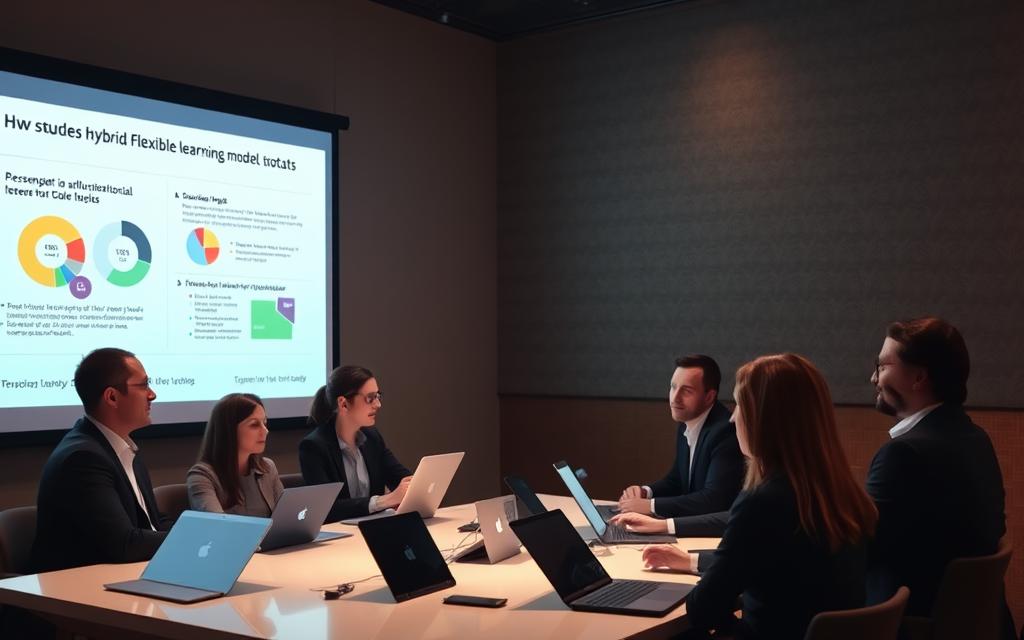
Columbia University’s School of Social Work is a great example of HyFlex in action. They updated classrooms with top-notch recording gear and dual monitors. This lets everyone, in person or online, join in.
Teachers set up special rules for online learning. They also trained helpers to deal with tech issues. This keeps education quality high and reaches more people.
Dartmouth College also uses HyFlex in some graduate programmes. They have cool camera tracking and audio systems. This makes sure everyone, even those online, can join in discussions.
The college also gave out lots of help for staff and students. This includes tech tips and teaching advice. Dartmouth’s effort shows how important it is to succeed with HyFlex.
Applications in Corporate Training Environments
Corporate training is another area where HyFlex shines. Many companies use it for employee training. It fits around everyone’s busy schedules and locations.
Big tech firms are leading the way with corporate training hyflex. They mix live online sessions with learning you can do anytime. People can pick how they want to learn, based on their work and time.
These programmes include short lessons and resources you can use right away. This makes learning easy to fit into work. Companies see more people finishing courses and learning better this way.
Manufacturing companies use HyFlex for safety training and learning about equipment. They show live demos to many places at once. People online can ask questions and get answers right away.
These hyflex case studies show how versatile HyFlex is. It works well in schools and companies. The key to success is good tech, clear rules, and lots of support.
Future Trends and Developments in HyFlex Technology
The world of education is changing fast, with HyFlex technology leading the way. Schools and colleges everywhere see the benefits of flexible learning. This is leading to exciting new developments in the future of hyflex.

Emerging Technologies and Innovations
Artificial intelligence is a big step forward for HyFlex. AI tools can now transcribe talks, translate languages, and tailor learning paths. These tools make learning more accessible for everyone.
New audio and video systems are changing remote learning. Cameras follow teachers around, and sound technology makes it feel like you’re there. This makes learning from home feel more real.
Analytics tools give teachers new insights into how students learn. They track who’s involved in class and who might need help. This helps teachers support their students better.
Predictions for Widespread Adoption
After the pandemic, we all want learning to be more flexible. Experts say HyFlex will keep growing in schools and businesses. Schools are spending more on tech to support blended learning.
Businesses are also using HyFlex for training. They see how it saves money and makes learning easier. This shows hyflex adoption trends are strong.
Several things will help HyFlex grow even more:
- More demand for learning that fits work
- More focus on learning for life
- Better online tools for working together
- Systems that work well together
New tech will make HyFlex easier to use. As it gets cheaper and easier, more places will use it. This means everyone can get good education.
In the future, we’ll see better ways to check if students have learned. These new methods will make sure HyFlex learning is top-notch. It will be flexible and meet high standards.
Best Practices for HyFlex Adoption
Adopting HyFlex technology needs careful planning and smart strategies. Both teaching methods and technical setup are key to a good learning space. Here are some tips for educators and schools to adopt hybrid flexible models.
Recommendations for Educators
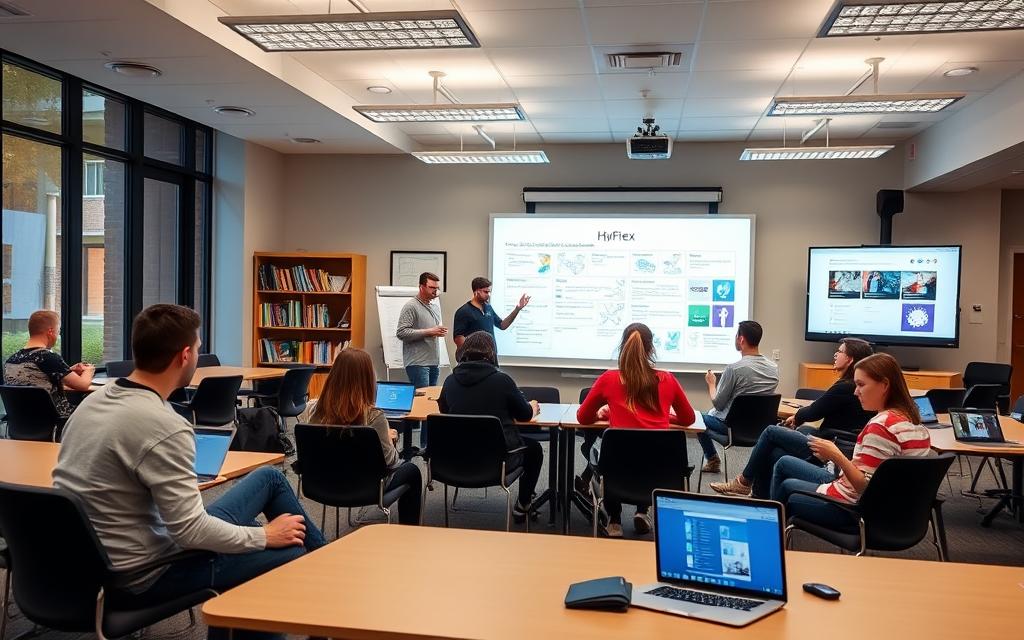
Educators are vital for HyFlex success. Good preparation is the difference between a messy start and smooth teaching. Start by redesigning your courses to include all learning modes.
Planning well is the base of good HyFlex teaching. Make sure students know how to engage in different ways. Also, keep communication open for all learners.
Use teaching assistants wisely. They can help with chat, breakout rooms, and tech support. This lets teachers focus on teaching and talking to students.
Columbia University’s Center for Teaching and Learning has great advice on hybrid teaching. They stress clear rules and many ways for students to get involved.
Regularly check in with students. Ask for their thoughts and change your teaching as needed. This keeps teaching improving.
Institutional Support Strategies
Schools need to make a supportive environment for HyFlex. This means working together across different areas. Good planning is key for lasting success.
Training for teachers is a must. It should cover tech skills, teaching changes, and classroom management. Keep teaching quality up with ongoing training.
Help students get used to HyFlex with orientation. Give them clear rules for different learning modes. Make sure tech works well to avoid problems.
Invest in good tech to make HyFlex work well. Schools should focus on fast internet, good audio-visual gear, and the right classroom setup. These things help HyFlex succeed.
Make policies to guide HyFlex use. Set rules for course design, tests, and teacher support. Clear policies help students have a fair experience.
| Support Area | Key Components | Implementation Timeline | Success Indicators |
|---|---|---|---|
| Faculty Development | Technical training, pedagogical workshops, mentoring programmes | 6-12 months | 90% faculty participation, improved student satisfaction scores |
| Technology Infrastructure | Classroom upgrades, LMS integration, support systems | 12-18 months | 99% system uptime, reduced technical issues |
| Student Preparation | Orientation sessions, technical guides, support services | 3-6 months | Increased participation rates, lower dropout numbers |
| Policy Framework | Quality standards, assessment guidelines, resource allocation | 6-9 months | Consistent implementation, equitable student experiences |
Make sure you have enough money for the start and to keep things going. Plan for new tech, software updates, and staff training. Good funding keeps HyFlex going strong.
Working together between teaching and tech teams is important. Keep talking to solve problems and find new chances. This teamwork helps schools do well with HyFlex.
Watch how things are going with HyFlex. Look at how students do, how teachers feel, and how resources are used. This helps make teaching better over time.
Conclusion
HyFlex technology is changing education in big ways. It mixes online and in-person learning to make studying flexible. Tools like Moodle, Canvas, Zoom, and Microsoft Teams help make this possible.
Students get more freedom in how they learn. Teachers and schools can reach more people while keeping quality high. But, there are challenges that need careful planning to solve.
This summary shows HyFlex is here to stay. It combines new tech with time-tested teaching methods. It makes learning spaces that fit everyone’s needs.
HyFlex is a big step forward for education and training. It makes learning more personal and accessible. This new way of learning will likely change education for a long time.
FAQ
What is HyFlex technology?
HyFlex technology blends learning models to offer flexibility. Students can choose how they learn—online or in-person. It ensures everyone gets the same quality education, fitting modern learning needs.
Who developed the core principles of HyFlex learning?
Brian Beatty outlined HyFlex’s core principles. These include Learner Choice, Equivalence, Reusability, and Accessibility. They guide in creating effective HyFlex courses.
How does HyFlex differ from traditional blended learning?
HyFlex focuses on student choice and equal learning experiences. It evolved from earlier models, aiming for more flexibility and inclusivity. Unlike traditional blended learning, it puts student choice first.
What are the key technological tools used in HyFlex models?
Key tools include Moodle and Canvas for online resources. Zoom and Microsoft Teams are used for live sessions. Dartmouth College uses advanced tech for better learning experiences.
What benefits does HyFlex offer to students?
HyFlex gives students more flexibility and personal learning paths. It lets them learn in ways that fit their schedules. For example, North Carolina Central University has seen better student engagement.
What challenges are associated with implementing HyFlex?
Challenges include technical issues and teaching adjustments. Columbia University has tackled these with dedicated staff and training. This helps in smooth implementation.
How can educators design effective HyFlex course content?
Educators should make sure all learning modes are equal. They can use polls and discussion boards for feedback. Columbia University’s methods keep students engaged and learning well.
Are there successful examples of HyFlex in higher education?
Yes, Columbia University and Dartmouth College have done well with HyFlex. They’ve updated classrooms and supported their students. These examples show how HyFlex improves learning.
Can HyFlex be used in corporate training environments?
Absolutely. HyFlex is great for professional development. It lets employees learn when they can, fitting their schedules.
What future trends are expected in HyFlex technology?
Future trends include AI and better tech. The shift to flexible learning is making HyFlex more popular. It’s being adopted in many areas.
What are the best practices for adopting HyFlex?
Good practices include planning and using technology well. Carleton University and Columbia University share tips on support and structure. This helps in successful adoption.
How does HyFlex ensure accessibility and inclusivity?
HyFlex meets different learning needs by allowing choice. It ensures everyone can learn, regardless of their situation. This is key to its Accessibility principle.
What role do synchronous and asynchronous elements play in HyFlex?
Synchronous elements, like Zoom, offer real-time interaction. Asynchronous elements, like Moodle, provide flexibility. Together, they ensure all students can learn effectively.
